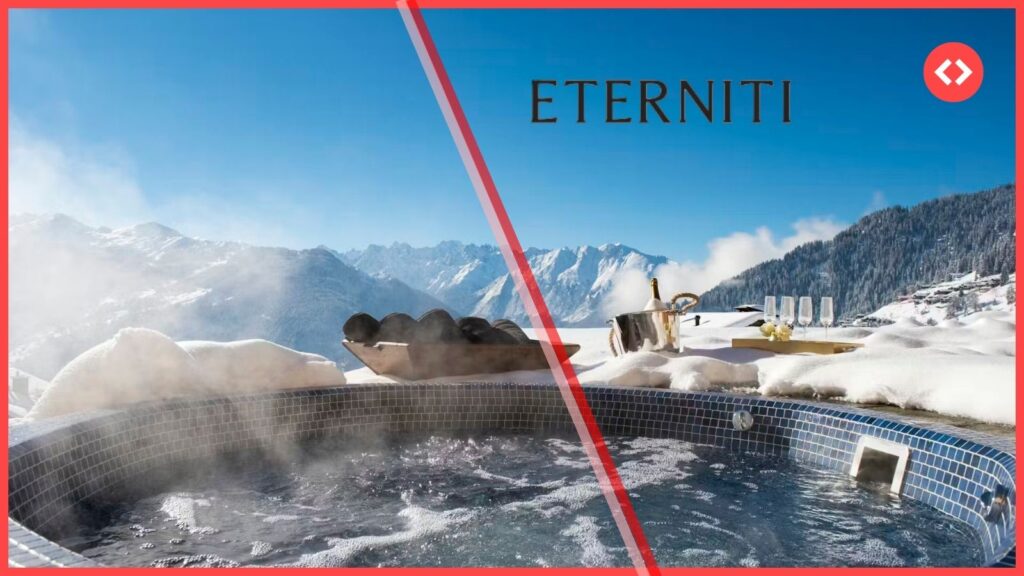
Geneva-based Eterniti just closed €30M (€50M total raised) to scale a luxury villa consolidation play across three separate consumer brands. The strategy: acquire local operators in high-barrier destinations, keep their names intact, unify the backend, and never mention “Eterniti” to guests or owners. It’s profitable, growing 2x annually, and backed by Swiss PE targeting the “experience economy.”
But the real story isn’t the funding. It’s whether luxury short-term rental consolidation can avoid the fate of every other roll-up that’s tried this.
In this Eterniti funding analysis, we break down the unit economics, the acquisition thesis, the regulatory arbitrage, and the three things that could break the model at scale.
The Setup: Three Brands, One War Chest
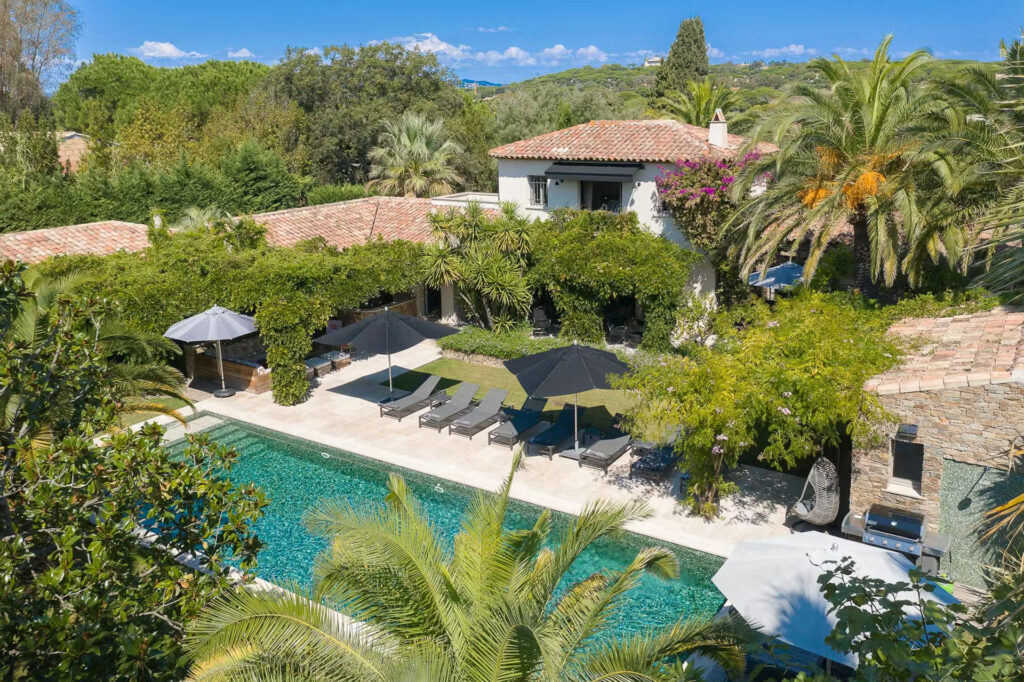
Eterniti operates 800+ luxury villas and chalets across 25 destinations under three distinct brands:

| Brand | Positioning | Weekly Rate Range | Key Markets |
| Bo House | Ultra-luxury villas | €200K – €400K | Saint-Tropez, Courchevel, St. Barts |
| Verbier Exclusive | Boutique alpine chalets | Undisclosed (likely €15K–€50K) | Verbier, Swiss Alps |
| Emerald Stay | Premium vacation rentals | €3K – €20K | French Alps, Mallorca, Marrakech, Austin TX |
On the surface, this looks like standard product segmentation. It’s not. It’s a calculated M&A arbitrage strategy disguised as brand architecture.
The actual play: Buy boutique local operators in places where new STR licenses are frozen or impossible to get, retain their brand equity and owner relationships, integrate them onto a single operational platform, and extract economies of scale that 12-property local operators can’t achieve.
Eterniti started in 2018 with Emerald Stay. Verbier Exclusive was an acquisition. Bo House appears to be organic but positioned as a separate ultra-luxury entity. The parent company — Eterniti — exists only for investors, staff, and industry press. Guests booking a €300K/week villa in Saint-Tropez have no idea they’re transacting with the same group managing a €5K chalet in Morzine.
The Money: Who’s Backing This and Why
Lead investor: Limestone Capital, a Swiss private equity firm laser-focused on the “experience economy.”
Shareholder roster that matters:
- Olivier Jolivet — Former CEO of Aman Group, current CEO of Como Group (two of the most exclusive hotel brands globally). This is not decorative — Jolivet knows how ultra-luxury hospitality operations scale and what breaks when they do.
- Valtteri Bottas — Formula 1 driver and investor with access to ultra-wealthy traveler networks.
The investment thesis, per Limestone’s Managing Partner Benjamin Habbel:
“We are strongly convinced by the structural growth of the €240 billion luxury hospitality industry — the fastest-growing segment in travel, with an expected CAGR of approximately 10% over the next five years.”
Translation: Institutional capital sees luxury leisure accommodation as a hedge against economic uncertainty. Wealthy travelers don’t stop vacationing in recessions — they just stop staying in mid-tier properties.
What the €30M is likely funding:
- Selective M&A: Acquiring 2–4 boutique operators in tightly licensed markets (Algarve, Greek islands, Courchevel, premium US ski towns). This is the core thesis.
- Technology infrastructure: Building or licensing a unified PMS, owner portal, and direct booking engine to reduce OTA dependency.
- Geographic expansion: Confirmed move into St. Barts. Likely eyeing Turks & Caicos, Aspen/Vail, Mykonos/Santorini.
Revenue growth: 2x year-on-year for four consecutive years. No public revenue figures, but if we assume they’re taking 25–30% commission on gross bookings (standard for full-service luxury villa management), 800 properties averaging €150K annual gross rent = €120M GBV → €30–36M revenue run rate. That would justify a €50M total raise at this stage.
Why Three Brands? The Strategic Logic Most Operators Miss
Here’s what Eterniti understands that most STR consolidators don’t:
1. Price Anchoring Protection
A guest booking a €7,000/week Emerald Stay chalet in the French Alps and a guest booking a €250,000/week Bo House villa in Saint-Tropez are not in the same psychological relationship with the product.
Put both on the same platform under one brand, and you collapse the perceived exclusivity at both ends. The €250K guest sees €7K listings in the dropdown and questions whether they’re overpaying. The €7K guest sees €250K villas and feels like a budget option.
Separate brands let each tier anchor its own pricing, build its own review ecosystem, and maintain its own positioning without contamination.
This is Hotel 101 — Marriott doesn’t put Ritz-Carlton and Courtyard in the same booking flow for this exact reason. But most STR operators still think “one brand, all price points” is simpler. It’s simpler operationally. It’s worse commercially.
2. Owner Segmentation and Acquisition Pitch
The owner of a €15M Saint-Tropez villa and the owner of a €1.5M ski chalet in Morzine have fundamentally different conversations with property managers.
Saint-Tropez owner priorities:
- Discretion (celebrity guests, privacy concerns)
- White-glove service (dedicated concierge, staff vetting)
- Yield optimization at the ultra-high end (€200K weeks are rare; you can’t afford empty calendar days)
Morzine chalet owner priorities:
- Occupancy consistency (middle 70% is fine if it’s predictable)
- Minimal hands-on involvement (they don’t want calls about broken dishwashers)
- Transparent reporting (they’re financially sophisticated but not hospitality operators)
Separate brands let Eterniti tailor the pitch, fee structure, and relationship cadence to each profile while keeping the operational infrastructure unified behind the scenes.
3. Acquisition with Continuity (The Real Play)
When Eterniti acquires a local operator like Verbier Exclusive, they’re buying:
- Local trust: Years of owner relationships in a tight-knit alpine resort community
- Destination SEO equity: “Verbier chalets” searches that rank for the acquired brand
- Regulatory licenses: STR permits that are grandfathered and can’t be replicated
- Staff loyalty: Teams who identify with the local brand, not a faceless parent company
If Eterniti rebrand everything under one logo, they destroy the asset they just bought.
The smart move: Keep Verbier Exclusive’s name, website, and guest-facing identity. Integrate the backend — accounting, owner payments, PMS, staff training, insurance — onto Eterniti’s centralized platform. The guest experience stays local. The cost structure gets institutional.
This is exactly how private equity rolls up HVAC contractors and dental practices. STR operators are finally figuring it out.
4. Regulatory and Tax Flexibility
France’s meublé de tourisme framework differs from Switzerland’s cantonal permits, which differ from Spain’s vivienda de uso turístico rules.
Operating through separate legal entities — each holding the appropriate licenses for its jurisdiction — is cleaner than a single corporate umbrella navigating 25 different regulatory environments.
More importantly: Eterniti’s model of year-round local hospitality staff may classify them as commercial hospitality operations rather than private short-term rentals in some jurisdictions.
That distinction matters. Cities cracking down on STRs (Barcelona, Amsterdam, Paris) are targeting private apartment rentals that remove housing stock. Luxury leisure destinations — ski resorts, Mediterranean villas, Caribbean estates — have been largely untouched because they’re not displacing residential housing.
Eterniti is structurally positioned to avoid the regulatory risk crushing urban STR operators.
The Unit Economics: What Has to Be True for This to Work
Let’s reverse-engineer the model.
Staffing Math
Publicly stated: 120 hospitality staff year-round, rising to 200 during peak season.
Ratio: 120 staff ÷ 800 properties = 1 staff per 6.7 properties year-round.
For context:
- Standard STR property management: 1 full-time employee (FTE) per 15–25 properties (mostly remote coordination, outsourced cleaning)
- Boutique villa management: 1 FTE per 5–10 properties (includes concierge, on-site coordinators)
- Ultra-luxury hotel-residential: 1 FTE per 2–4 units (full white-glove service)
Eterniti is closer to boutique hotel ratios than STR management ratios. That’s intentional. They’re not competing with Vacasa or Evolve — they’re competing with hotel-branded residences and private villa agencies.
Cost implication: Assuming €40K average fully loaded cost per FTE in Europe (mix of junior coordinators and senior concierge staff), that’s €4.8M annual payroll for 120 staff. At 800 properties, that’s €6,000 per property per year in direct labor.
If they’re generating €30M revenue at 800 properties, that’s €37,500 revenue per property per year. Labor is ~16% of revenue. That’s sustainable if gross margins hold.
Commission Structure (Estimated)
Luxury villa management typically charges:
- 15–20% of gross bookings for portfolio properties (non-exclusive)
- 25–35% of gross bookings for exclusive management agreements
Eterniti’s press materials emphasize “the majority under exclusive agreements.” Let’s assume 70% exclusive at 28% commission, 30% portfolio at 18%.
Average blended commission: ~25%
If 800 properties average €150K in annual gross bookings (conservative for luxury):
- Total GBV: €120M
- Revenue at 25% commission: €30M
- Operating expenses (staff, tech, marketing, overhead): ~€20M
- EBITDA: ~€10M (33% margin)
That would make them profitable, which aligns with their “profitable for four years” claim.
The question: Can they hold 33% EBITDA margins as they scale to 2,000 properties? Or do owner acquisition costs, technology investment, and competitive pressure compress margins to 15–20%?
Technology Stack (Speculation)
They’ve signaled investment in “booking platform and operational tools.” Here’s what they likely need:
- PMS: Probably at this scale they need a PMS that can handle luxury inventory, multi-entity structures, and white-label guest portals. Cost: ~€15–25 per property/month = €120K–€240K annually.
- Direct booking engine: Building proprietary to reduce OTA dependency. Development cost: €300K–€500K one-time, €100K annual maintenance.
- Owner portal: Custom build for reporting, payment tracking, calendar management. Cost: €200K–€400K.
- Channel manager: Cost: €10–15 per property/month = €96K–€144K annually.
Total tech spend estimate: €600K–€1M annually (after initial build costs). That’s manageable at €30M revenue.
The Risks Nobody’s Talking About
1. Institutional Capital Exit Timelines vs. Luxury Hospitality Build Times
Private equity funds have 5–7 year hold periods. Limestone invested in 2024 (likely). That means they’re eyeing an exit around 2029–2031.
Exit options:
- Strategic sale to a hotel group (Four Seasons, Rosewood, Aman all have private residence divisions)
- Secondary PE sale to a larger fund
- Rollup into a public hospitality REIT
The problem: Luxury hospitality businesses take 10+ years to mature. Brand equity, owner trust, and market positioning can’t be rushed. If Limestone pushes for growth that sacrifices quality — adding 500 properties in 18 months to hit revenue targets — guest satisfaction (currently 9.5/10) collapses, and the whole model unravels.
Watch: Whether they maintain 9.5+ guest satisfaction scores as they scale past 1,200 properties. If that number drops below 9.0, the model is breaking.
2. Owner Retention When PE-Backed Competitors Get Aggressive
Exclusive management agreements are sticky, until they’re not.
If Sonder, AvantStay, or a well-capitalized hotel brand (Four Seasons Private Residences, Rosewood Residential) enters Eterniti’s markets and offers owners:
- Higher revenue guarantees
- Lower commission rates
- Better tech/reporting
…then Eterniti’s exclusive agreements become renegotiation opportunities.
The defense: Operational excellence and local trust. But that only works if execution stays sharp. One bad season in Saint-Tropez where owners see 20% occupancy drops while competitors are full, and the renewals get tense.
3. The Vacasa Cautionary Tale: What Happens When Volume Trumps Quality
Vacasa tried to consolidate the STR market at scale, unsuccessfully.
What broke:
- Tried to manage 35,000 properties with centralized operations
- Guest satisfaction plummeted (sub-4 stars on many OTAs)
- Owners revolted over poor service and missed cleanings
- Technology couldn’t substitute for local expertise
- Growth targets forced them to take on marginal inventory
Casago began acquiring Vacasa’s management contracts in 2024 for a fraction of the public market valuation. (Read our full breakdown: Casago-Vacasa acquisition analysis)
Eterniti’s model is different — higher-touch, lower volume, luxury-focused. But the fundamental question remains: Can centralized operations deliver localized luxury at scale?
If they hit 2,000 properties and that 1:6.7 staff ratio slips to 1:15, the model becomes Vacasa 2.0.
4. Direct Booking Dependency Illusion
Eterniti talks about building “proprietary technology” and “direct booking capability” to reduce OTA reliance.
Reality check: In luxury leisure travel, 60–70% of bookings come from repeat guests, referrals, and concierge networks — not Google searches or OTA browsing.
The value of a direct booking engine isn’t replacing Airbnb Luxe (which drives new customer acquisition). It’s retaining guests who’ve stayed once and converting them to direct repeat bookings.
If Eterniti’s tech investment is focused on replacing OTA distribution rather than retention tools (CRM, loyalty programs, personalized upsells), they may be solving the wrong problem.
What We’re Watching: The Signals That Tell Us If This Works
Over the next 12–24 months, these indicators will reveal whether Eterniti’s model executes or unravels:
Indicator 1: Acquisition Velocity and Geography
What to watch: Do they announce 2–3 boutique operator acquisitions in 2026? Which markets?
Why it matters: If they buy operators in Courchevel, Mykonos, and Aspen — all tightly licensed, high-barrier markets — that confirms the regulatory arbitrage thesis. If they start acquiring in open markets like Texas or Florida, it signals they’re pivoting to volume over exclusivity.
Prediction: They’ll target 1–2 alpine acquisitions (Courchevel or Zermatt) and 1 Mediterranean (Greek islands or Algarve) in 2026.
Indicator 2: Direct Booking Platform Launch
What to watch: Do they announce a unified booking engine that consolidates Emerald Stay, Bo House, and Verbier Exclusive onto one backend?
Why it matters: If yes, they’re serious about reducing OTA dependency. If no, they’re still relying on Airbnb Luxe and Booking.com for customer acquisition — which means they don’t have pricing power.
Prediction: They’ll launch a white-label booking engine by Q4 2026, but 60%+ of bookings will still come from OTAs and referrals through 2027.
Indicator 3: Guest Satisfaction Scores
What to watch: Does their reported 9.5/10 guest satisfaction hold as they scale past 1,000 properties?
Why it matters: This is the operational quality test. If satisfaction drops to 8.5 or below, it means centralized operations are breaking down and local teams are overextended.
Prediction: Satisfaction holds at 9.3–9.5 through 2026, then dips to 8.8–9.0 in 2027 as they scale faster than they can hire/train staff.
Indicator 4: Exclusive Agreement Renewals
What to watch: When Verbier Exclusive’s original owners come up for contract renewal (likely 3–5 year terms), do they re-sign?
Why it matters: If acquired operators’ owners start leaving after the initial lock-in period, the consolidation thesis fails. Owners vote with their renewals.
Prediction: 70%+ renewal rate on exclusive agreements through 2027, but watch for renegotiations demanding lower commissions or higher revenue guarantees.
The Bottom Line: What Eterniti Gets Right (And What Could Break)
What They Get Right:
✅ Multi-brand architecture protects pricing and positioning — This is the single smartest structural decision. It’s how luxury hospitality actually works.
✅ Acquisition strategy targets regulatory moats — Buying licensed operators in frozen markets can be the only scalable way to enter destinations like Verbier or Saint-Tropez.
✅ Local brand preservation post-acquisition — Keeping Verbier Exclusive’s name retains the trust and SEO equity they paid for.
✅ High-touch staffing model differentiates from volume STR operators — 1:6.7 staff ratio signals they’re competing with hotels, not Airbnb property managers.
What Could Break:
❌ Institutional capital timelines vs. luxury brand-building timelines — PE wants exits in 5–7 years. Luxury hospitality takes 10+ years to mature.
❌ Unit economics under margin pressure at scale — Can they hold 30%+ EBITDA when they’re competing for acquisitions and owners have leverage?
❌ Technology substitution fallacy — Every STR consolidator thinks better software solves operational complexity. It doesn’t. People solve operational complexity.
❌ Owner retention when exclusive agreements expire — The model only works if owners re-sign. One bad season or aggressive competitor offer, and renewals get dicey.
Final Take: Is This a Blueprint or a Warning?
Eterniti’s strategy is a sophisticated luxury STR consolidation model. They seemed to have been watching Vacasa’s mistakes, structured brands intelligently, and targeted markets with real barriers to entry.
But the fundamental question remains: Can centralized operations deliver decentralized luxury at scale?
History says no. Sonder, Vacasa, AvantStay, and a dozen smaller operators have tried to industrialize hospitality. Most failed because they prioritized growth over quality.
Eterniti is betting they can scale without sacrificing service. They’ve got the right team (Olivier Jolivet knows how Aman and Como operate globally), the right backers (Limestone understands experience economy businesses), and the right structure (multi-brand, high-touch, exclusive agreements).
The test: What happens at 1,500–2,000 properties? Do they stay disciplined and maintain 9.5/10 satisfaction? Or do growth targets force them to take marginal inventory, stretch staffing ratios, and become Vacasa 2.0?
Resources
Related RSU Coverage:
- Casago-Vacasa Acquisition: What It Means for STR Managers
- GuestReady’s Spain Deal: How to Scale Past 200 Units Through M&A

Uvika Wahi is the Editor at RSU by PriceLabs, where she leads news coverage and analysis for professional short-term rental managers. She writes on Airbnb, Booking.com, Vrbo, regulations, and industry trends, helping managers make informed business decisions. Uvika also presents at global industry events such as SCALE, VITUR, and Direct Booking Success Summit.