
Blog

Folly Beach Reinstates Its Licence Cap, Greece Matches Platform Data to Tax Returns, Abu Dhabi Opens Licensing to Tenants
Global short-term rental regulations are shifting accountability from property owners to those controlling the listings. Folly Beach, South Carolina, recently renewed its 800-license cap while removing an illegal income-based fee. Greece is now auditing 2025 platform booking data against declared income, penalizing registered property managers for discrepancies. Meanwhile, Abu Dhabi expanded license eligibility to tenants and third parties, but strictly mandates a valid license number on every single listing page.

SCALE France turns five: three days that tell you where the French short-term rental market is heading
SCALE France turns five on November 25-26, 2026 at Les Salons de l'Aveyron in Paris, and the programme now stretches to three days. A French-language SCALE With AI opens on November 24, and a new small-group financing session, Money Talks by MPM, closes the second day. Read together, the three formats say the French market has stopped asking only how to grow and started asking how to fund and how to exit.

EU Affordable Housing Act: Restrictions Would Expire After Five Years, Primary Residences Are Less Protected Than Reported
Key takeaways for property managers The Affordable Housing Act would not ban short-term rentals anywhere in Europe. It sets the conditions a city has to meet before it can restrict them on housing grounds, and it leaves the decision to restrict with the city. Nothing changes for your properties today. This is a Commission proposal. Parliament and Council still have to agree on a final text. The primary residence "exemption" is narrower than the headlines suggest. It limits what cities can do on housing grounds. It does not stop them restricting primary-residence hosting for other reasons. Two changes in the official text favour existing operators. Restrictions would expire after five years unless renewed, and transitional arrangements for lawful existing businesses became mandatory rather than optional. There is a cut-off date, and it arrives fast. Any local restriction adopted before the Regulation enters into force escapes its tests entirely.
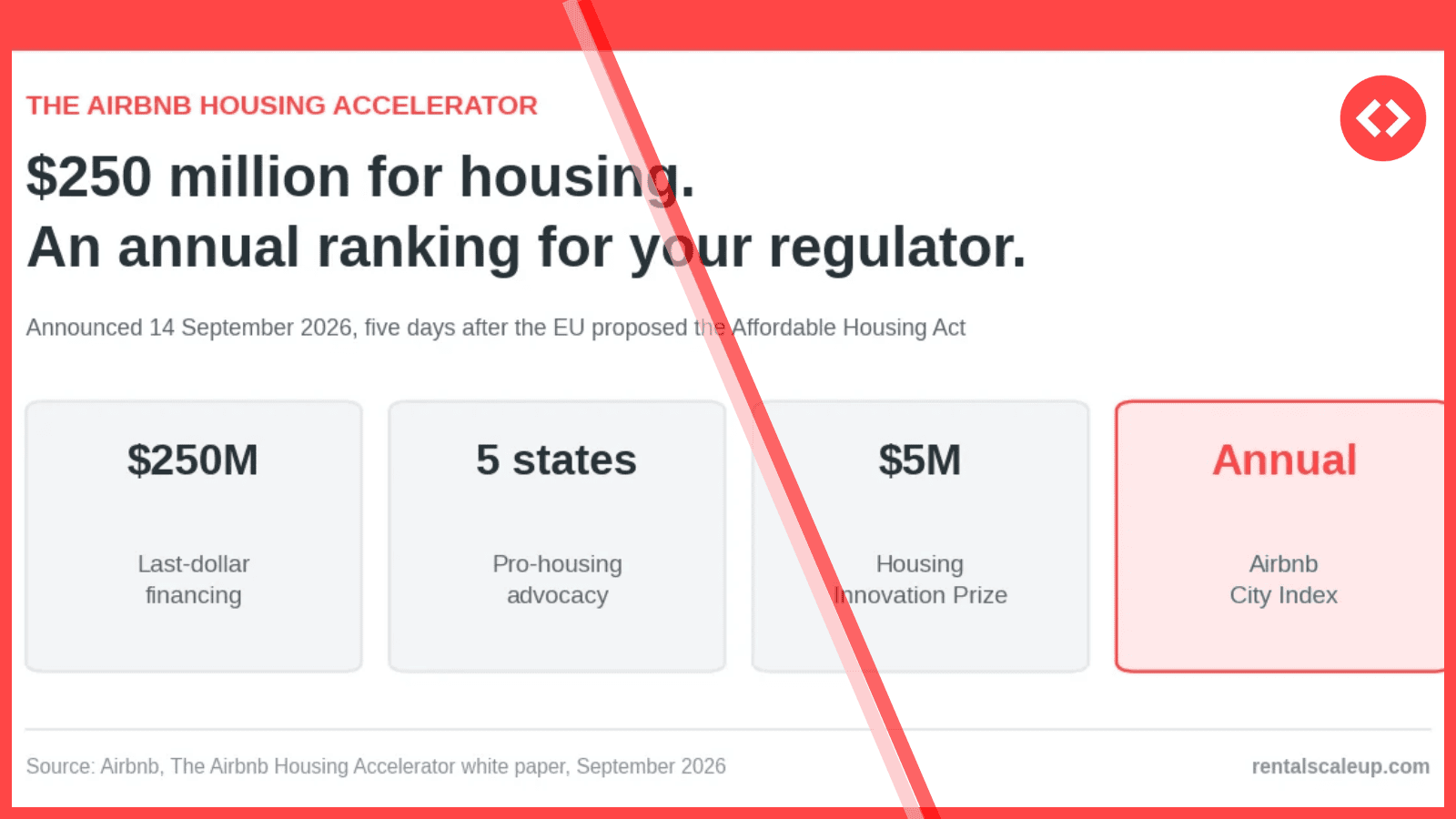
Airbnb’s $250 Million Housing Fund and City Index: What the Strategy Shift Means for Property Managers
TL;DR: Airbnb is shifting its public affairs strategy from defending short-term rentals to funding housing construction. Five days after telling Brussels that Europe's new housing law would not add a single home, it committed $250 million to unblocking stalled United States projects and $50 million to rural Spain. For managers, the capital matters less than the instrument announced beside it: an annual worldwide ranking of city housing policy aimed at the councils that control your licensing.

Expedia’s 2026 Vrbo & Escapia Launch: 12 Features to Recapture Last-Minute Bookings and Package Rentals with Flights
TL;DR: Expedia’s 12-feature fall rollout spans two platforms: nine new tools for Vrbo and three for its property management software, Escapia. The update introduces same-day bookings, promotional offers, and the upcoming ability to bundle Vrbo stays into Expedia flight packages. Separately, as of September 15, 2026, Vrbo has officially begun permanently suspending listings that fall below a 2.0-star average, following initial warnings sent out on August 31.

Montgomery County Routes Licence Checks Through Platforms, England Sets a Register Date, Shinjuku Ward Proposes Zonal Limits
Montgomery County, Maryland introduced Bill 42-26 on September 15, requiring booking platforms to confirm a valid county licence before publishing a listing and barring them from processing payments for unlicensed rentals. In England, Culture Secretary Lisa Nandy confirmed that the national register of short-term and holiday lets will be fully operational by March 2027, ending a period without a published timetable. In Tokyo, Shinjuku Ward set out a policy on September 7 to prohibit private lodging in residential-only and school zones, a restriction that would reach existing operators after a grace period. The three moves sit at different points in the compliance chain: the payment rail, the national data layer, and the zoning map.
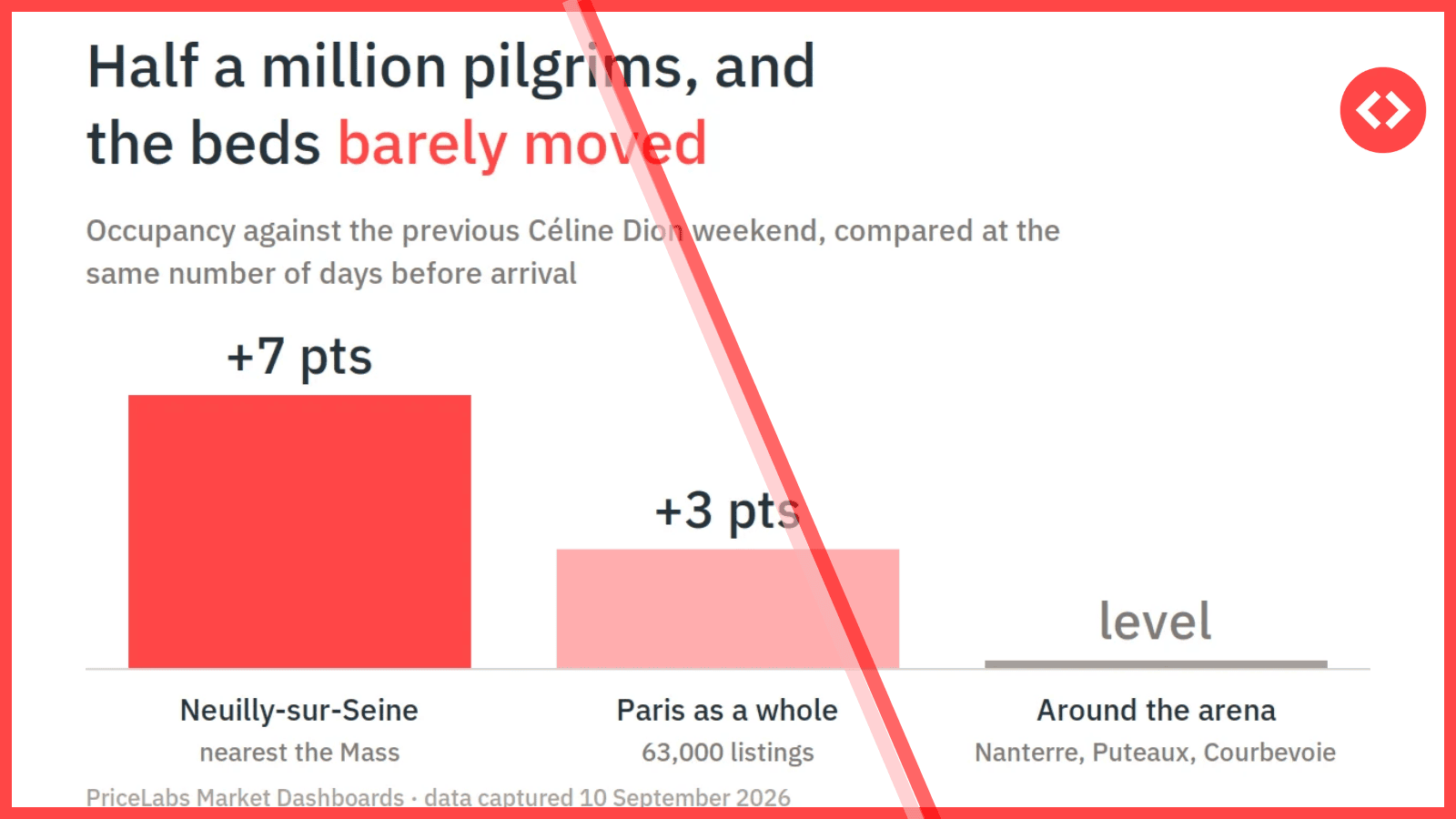
Céline Dion at Plenitude Arena and Pope Leo XIV in Paris: What the Airbnb Data Actually Shows
TL;DR: Céline Dion's residency at the Plenitude Arena in Nanterre (Paris La Défense Arena until this summer) overlaps with Pope Leo XIV's visit to Paris on 25 and 26 September. In the short-term rental data, her 30,000 a night leave the broad footprint, and his half a million leave one in a single town.
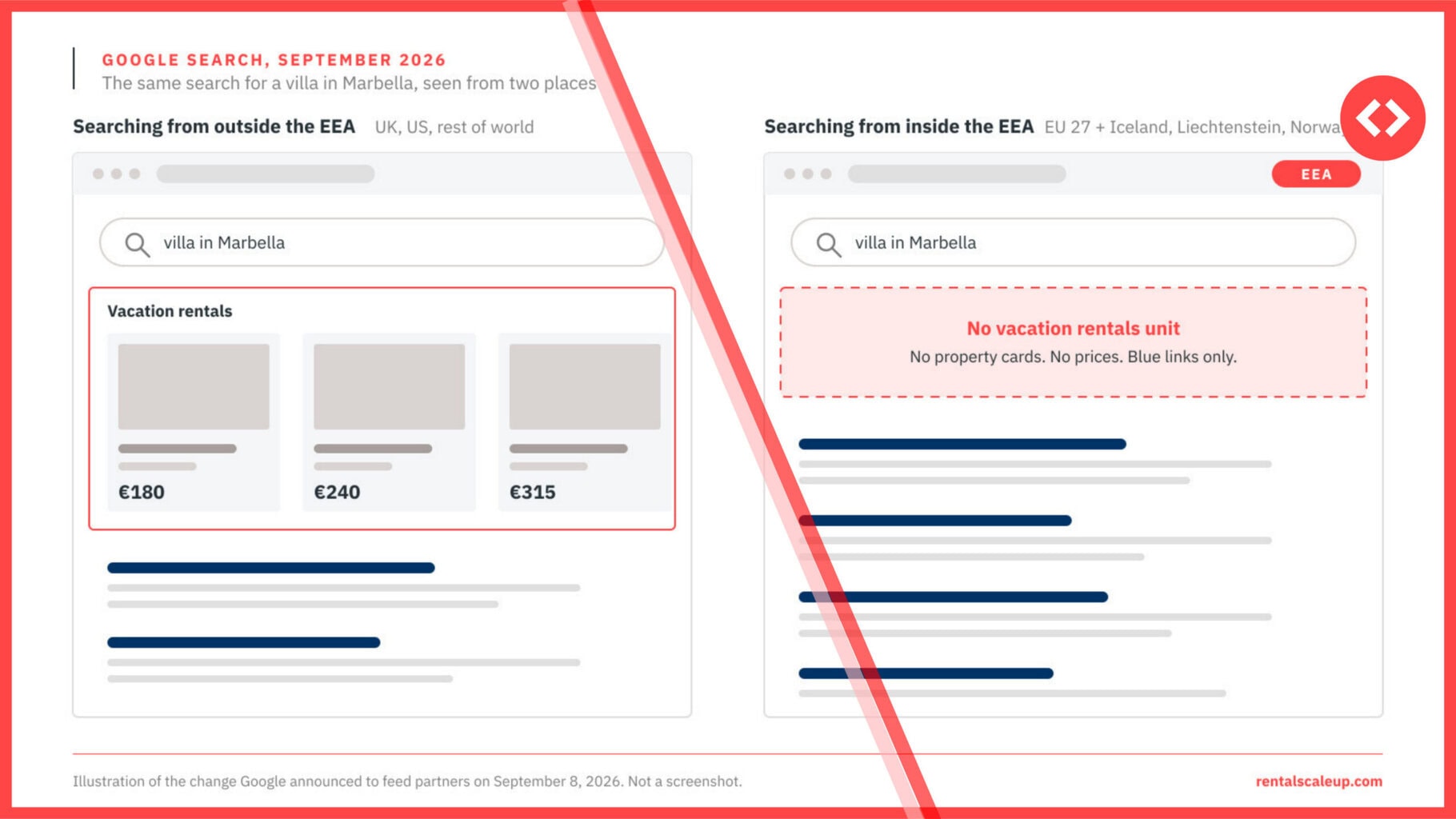
DMA Fallout: Google Removes Vacation Rentals from Search in Europe, and So Far Only the Aggregators Are Smiling
Google is deleting its free vacation rentals search unit in the European Economic Area to comply with a €460 million antitrust fine, while protecting its monetized hotel ads. Comparison aggregators like HomeToGo are celebrating the removal as a regulatory victory. For independent property managers, the result is an immediate distribution squeeze. If your guests search from inside Europe, your only free direct booking channel just vanished, abandoning you to high-commission platforms.

Rowlett Automates Hotel Tax Enforcement, Poland’s Building-Level Ban Clears Cabinet, Western Australia Issues Its First Fine
Airbnb and Vrbo do not collect hotel tax in Rowlett, Texas, and the city has hired a vendor to check whether operators file it themselves. Poland's cabinet approved a bill letting housing associations vote short-term rentals out of their buildings, though it is not law and the president has not said whether he will sign. Western Australia issued its first fine under its registration act: $2,000 for a missing number in an advertisement.

EU Affordable Housing Act: What the Leaked Draft Means for Short-Term Rental Managers
Key takeaways for property managers - Your rental rules do not change today. This is a draft, not an adopted law. It does not introduce an immediate Europe-wide rental limit or automatically cancel existing local restrictions. - Even an owner with just one rental could be affected. The key distinction is whether the property is the host’s main home or a separate rental property—not simply whether they employ a professional manager. - Authorities would need to explain and support their restrictions. That could give managers clearer grounds to challenge excessive rules. It could also help authorities defend restrictions that meet the proposed conditions.

VRMA, VRWS, SCALE Fest: the property manager’s guide to fall 2026’s three big short-term rental conferences
TL;DR: VRMA 26 Nashville (Oct 4-6), VRWS Lyon (Oct 8-9), and SCALE Fest Barcelona (Oct 24-25) all land within seven weeks of each other this fall. VRMA draws 2,500+ attendees and the widest vendor ecosystem; VRWS runs a single curated track capped near 800 operators, and SCALE Fest sells tickets only to operators managing 10+ units. For a 20+ listing property manager, the right pick depends on whether you need vendor breadth, curated content, or a peer-only room, not on which event has the bigger name.

Pennsylvania Advances Caps, Italy Enforces New Tax Rules, Ventura Hikes Fees and Caps Permits
TL;DR: In Pennsylvania, local municipalities like Kennett Square are proactively passing strict short-term rental caps while state-wide regulations remain debated in committee. In Europe, Italy is advancing its National Identification Code (CIN) mandate and now legally classifies anyone operating three or more short-term rentals as an entrepreneur requiring a VAT number. In California, Ventura finalized an overhauled ordinance that raises its permit fee by 648% and caps most owners at two permits citywide. Together, the three moves point to the same trend: compliance costs are rising and the loopholes that let casual operators scale are closing.

Vrbo Members Only Deals Shift to Auto-Enrollment: What Hosts Need to Know by September 10
TL;DR: Vrbo is applying Members Only Deals automatically from September 18, 2026, at 12% for Blue tier, 15% for Silver and 20% for Gold and Platinum. These discounts apply directly to the property's nightly rate. Hosts must opt out by September 10 through an emailed link. An Expedia Group page confirms the terms, including that the discounts stack on top of existing weekly and monthly discounts.
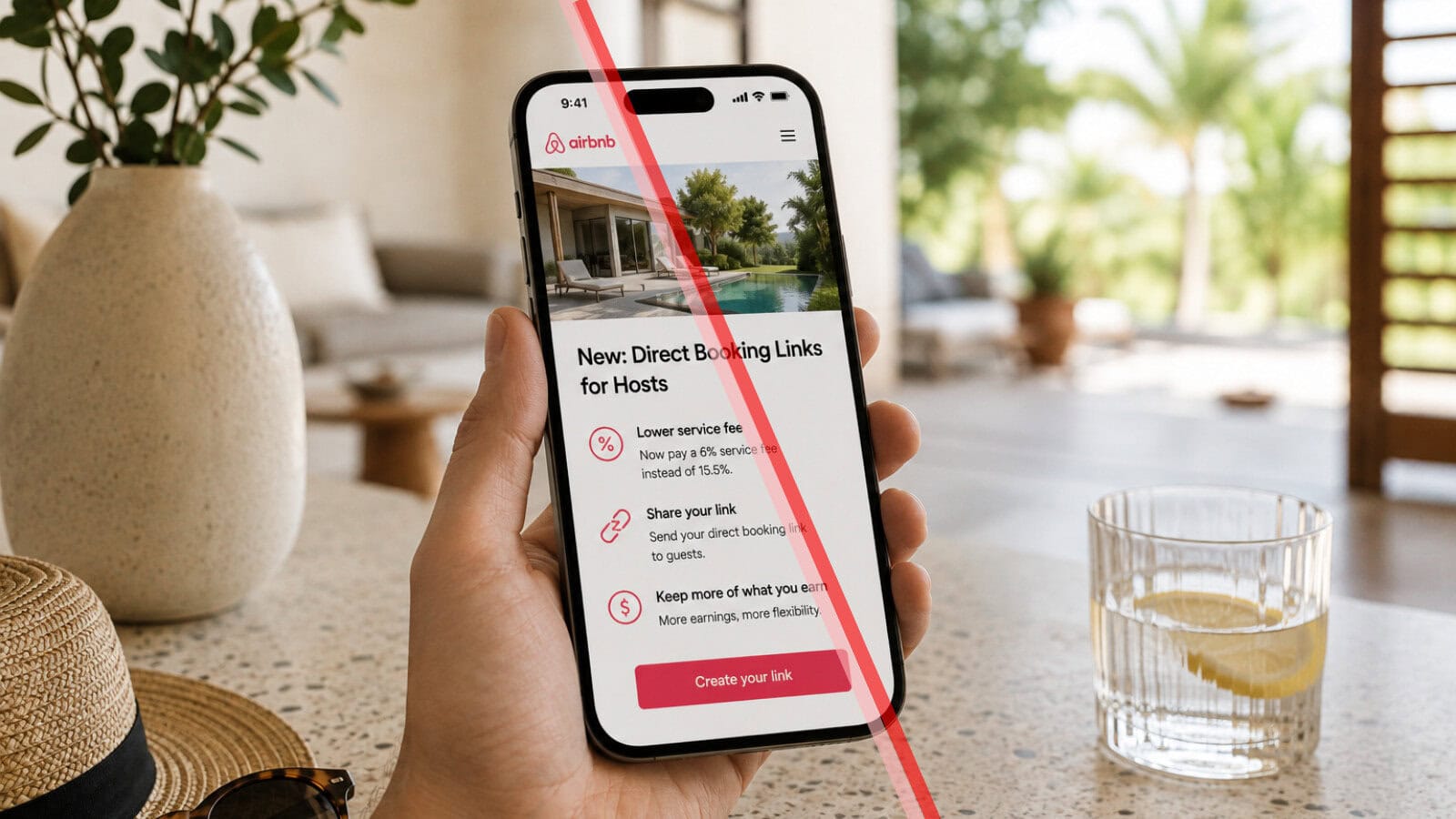
Airbnb’s New “Direct Booking Links” Cut Host Fees to 6%. They Also Reveal What Airbnb Charges Just to Find You a Guest
TL;DR: Airbnb is rolling out a direct booking link pilot that drops the standard 15.5% host fee to either 6% or 10% when hosts drive their own traffic. Despite being marketed as a direct booking link, the transaction still happens entirely on the platform, meaning Airbnb retains complete ownership of the guest relationship, data, and terms. The biggest takeaway is the unbundled pricing: By offering a 6% to 10% fee via this link, Airbnb has inadvertently revealed it values its demand-generation and guest-finding services between 5.5% and 9.5%.

Airbnb’s Supply Acquisition Strategy for Big Events: Explained Through Sundance
TL;DR: Airbnb is paying $200 to first-time hosts in Boulder, Colorado, as the city takes over from Park City, Utah, as the new home of the Sundance Film Festival in January 2027. The festival is a huge draw and brings a wave of demand with it, and Airbnb wants the supply to capture that demand. The strategy worth decoding is what comes next: how Airbnb turns supply it acquires for one event into supply that stays.

How to Build Your Hospitality Design System With AI
TL;DR: Send an owner a report, invite, or dashboard with the wrong brand colors, and it reads as inattention. Claude Design can reduce that repetition: build a saved brand system covering your logo, colors, fonts, photo style, and voice, then reuse those rules across reports, invites, dashboards, welcome sheets, and social graphics without specifying them every time. Setup takes about ten minutes; after that, one prompt replaces a manual design pass.
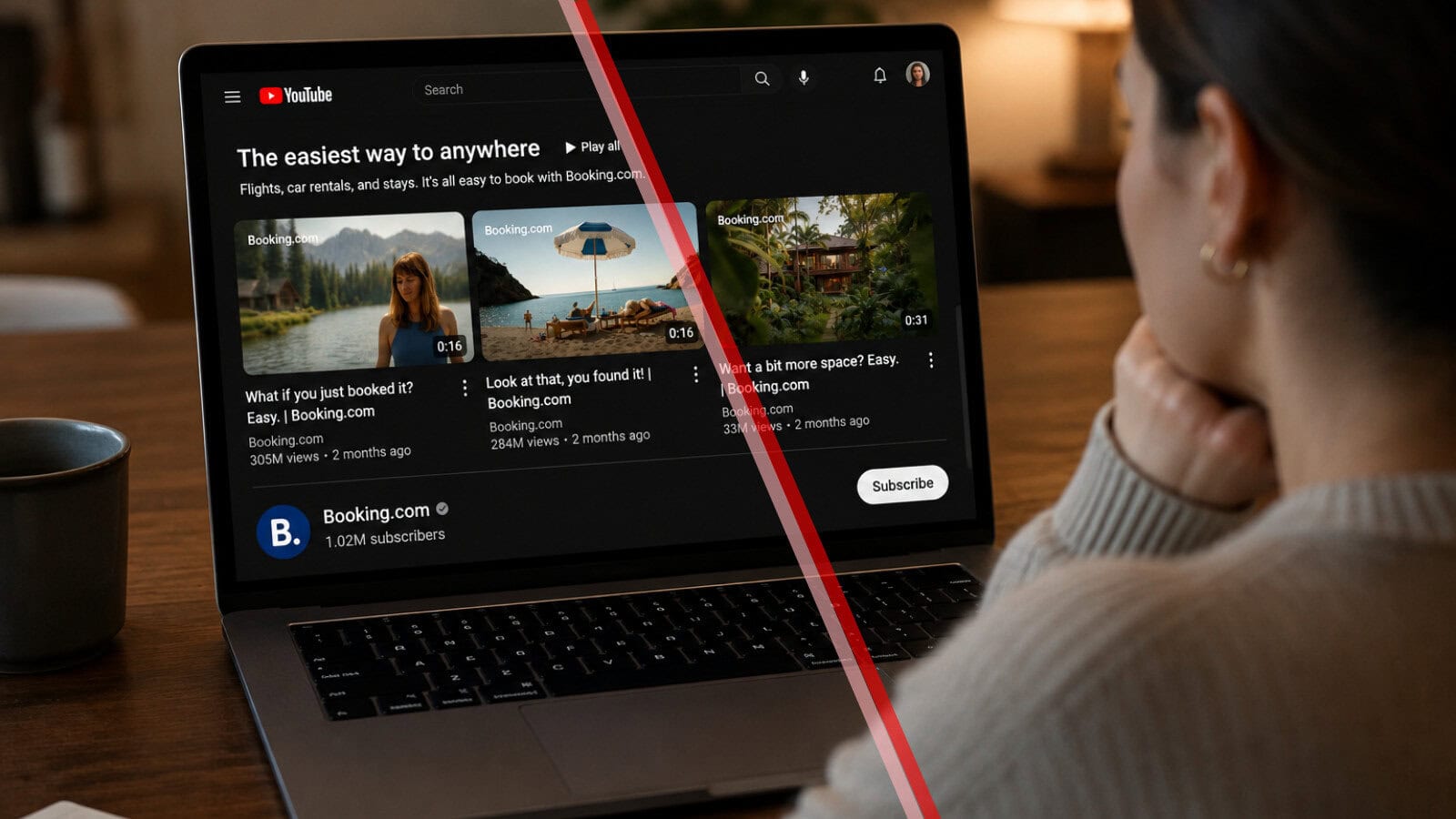
What New Booking.com Ads Reveal About Guest Tolerance for AI
TL;DR: Booking.com launched "The Easiest Way to Anywhere" on 8 June 2026, made by agency Zulu Alpha Kilo, and disclosed its AI use on screen, in the YouTube description, and in the agency's own announcement, which is considerably more than most advertisers currently manage. The transparency did not protect the work. Across every platform where audiences could respond, the most-liked comments objected regardless, and what they were objecting to turns out not to be the AI alone.

Clark County Shifts Liability to Platforms, Airbnb Challenges Salt Lake City, D.C. Considers Renter-Hosting Bill
TL;DR: Clark County, Nevada, has passed a measure prohibiting booking platforms from processing payments for unlicensed short-term rentals, shifting the compliance burden away from individual hosts. In Utah, Airbnb has issued a cease-and-desist letter to Salt Lake City over the municipality's use of decoy accounts to enforce its new zoning restrictions. Meanwhile, Washington, D.C., is weighing a bill that would allow renters to host and permit operators to license a second property, representing a potential expansion of the market's addressable supply.

How short-term rental managers can let AI answer guest questions for them
TL;DR: Short-term rental managers waste hours re-answering the same guest and staff questions, made worse by staff turnover. NotebookLM, a free AI tool from Google, fixes this by answering only from documents you upload, so it never guesses or hallucinates. Upload your house rules, check-in steps, and vendor contacts, and it becomes an instant, accurate answer source your whole team can use, no matter how many properties you manage.
Before You Slash Rates: 4 Steps to Protect Shoulder Season Revenue
TL;DR: RSU by PriceLabs and RevLabs by PriceLabs hosted a masterclass on August 20, 2026 with Jay Whiteley of VueStay Vacations by Casago and Uvika Wahi of Rental Scale-Up. The session covered why a review of last season should come before a pricing change, why available nights matter more than rate moves, how to keep owners from drifting during slow months, and how to get three departments solving one problem together.