

Cape Town Proposes Registration, Wales Sets a March Deadline, Budapest’s Castle District Polls in Favor of a Ban





Watch our latest video reports


AI in Vacation Rentals: Build YOUR AGENTS Yourself or Let Your Software PROVIDER Do It? PRICELABS’ Athena Shows the Trade-Off
As you may remember, throughout 2026, we have been talking here on Rental Scale-Up (RSU) …
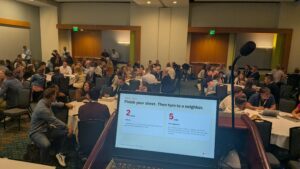
Most VAcation rentaL managers are a 2 out of 4 on AI. Score yours with the VRMA 2026 scorecard
At VRMA International in Nashville, I designed and co-presented a session where a room of …

A Host’s Guide to the Airbnb Fall 2026 Update: New AI and Social Features Explained
TL;DR: Airbnb’s 2026 fall update brings more of a guest’s planning into the app: where to go, which neighbourhood, and which saved listing to book. Recommendations can now come through a guest’s own connections, and AI picks which features of a listing get compared. For hosts, visibility depends more on complete listing data and on guests who arrive already recommended.

AI for Owner Acquisition: How Property Managers Can Now Find and Sign Owners Faster
TL;DR: Owner acquisition has become far more efficient and faster, but only for managers who set AI up properly first. A live poll found 54% are not using AI for owner acquisition at all. The RSU by PriceLabs webinar with Vintory covered three ways to build a target list of owners in any country, the four files that make an AI model useful for your business, the five assets it then produces, and processes that can help lower owner churn.

How to Build Your Hospitality Design System With AI
TL;DR: Send an owner a report, invite, or dashboard with the wrong brand colors, and it reads as inattention. Claude Design can reduce that repetition: build a saved brand system covering your logo, colors, fonts, photo style, and voice, then reuse those rules across reports, invites, dashboards, welcome sheets, and social graphics without specifying them every time. Setup takes about ten minutes; after that, one prompt replaces a manual design pass.
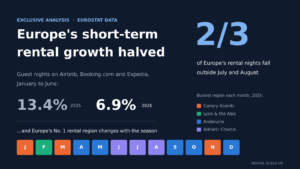
Europe’s short-term rental growth halved in 2026, and the data busts 4 myths
Exclusive Rental Scale-Up analysis of Eurostat’s short-term rental datasets for Airbnb, Booking.com and Expedia Group, …
AI in Vacation Rentals: Build YOUR AGENTS Yourself or Let Your Software PROVIDER Do It? PRICELABS’ Athena Shows the Trade-Off
As you may remember, throughout 2026, we have been talking here on Rental Scale-Up (RSU) …