Airbnb is currently performing a high-stakes delicate dance: bashing hotels in its global commercials while simultaneously onboarding boutique and independent hotels into its inventory to secure supply in regulated markets. This “Hotel Paradox” may be the core of Airbnb’s 2026 ad strategy: maintaining an “anti-hotel” soul in its marketing to differentiate its brand, even as it functionally evolves into a “Travel Super App“.
To execute this vision, Airbnb is moving beyond simple lodging to segment the market into three distinct traveler personas: The Escapee, who seeks total isolation; The Trendsetter, who chases “Instagrammable” cultural moments; and The Esthete, who values exclusive, expert-led discovery.
For professional managers, this shift signals that the platform is prioritizing “curated quality” and platform stickiness over basic square footage, meaning your success in 2026 may depend on how well you fit into the specific “lifestyle” Airbnb is spending millions to sell.
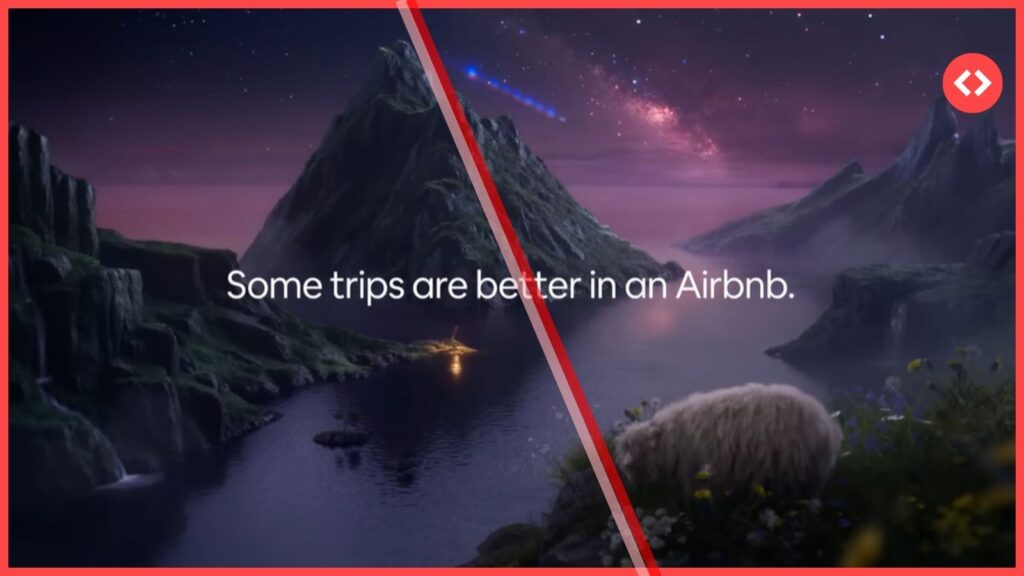
The “Middle of Nowhere” Ad | Airbnb
The most recent global spot is a beautifully animated critique of the traditional hotel industry.

Which song is used in Airbnb’s ‘The Middle of Nowhere’ commercial? The ad features the 80s classic “I Think We’re Alone Now” by Tiffany. The song creates a lighthearted and nostalgic mood that reinforces the theme of solitary escape.
What Happens: The video begins with peaceful nature scenes—a dragonfly on a leaf, people on a rocky lake shore, and showcases a small, moss-roofed cabin sitting in complete isolation.The message emphasizes that the best part of being in the “middle of nowhere” is the complete isolation it provides.
Airbnb’s Message: The ad encourages viewers to “Get an Airbnb and go where hotels can’t”. It ends with a beautiful shot of the cabin under a starry night sky with the aurora borealis, concluding that “Some trips are better in an Airbnb”.
Target Persona: The Escapee
The ad targets those seeking silence, nature, and isolation. The strategy is to show that Airbnb provides exclusive access to locations geographically unreachable for traditional hotels.
The Hotel Paradox as a Brand Moat
This ad represents a classic strategic pivot: doubling down on the narrative of uniqueness even as the platform moves closer to the hotels it critiques. By positioning itself as the only way to “go where hotels can’t,” Airbnb is building a protective brand moat around its most differentiated inventory.
However, for professional managers, the irony is thick: as of 2025, Airbnb has officially relaunched its hotel pilot, placing boutique hotels side-by-side with vacation rentals in search results. This “two-track” strategy allows them to maintain supply in regulated markets like New York while keeping an “anti-hotel” soul in their marketing to avoid becoming just another Booking.com.
2. The “K-Pop Style” Ad: The Super-App Ambition
This spot is the most explicit about the platform’s new structure: Homes, Experiences, and Services.
Which song is used in Airbnb’s ‘K-Pop Style’ commercial? The high-energy track is “ExtraL” by JENNIE & Doechii. Through this music choice, Airbnb is specifically targeting Gen Z and younger Millennial travelers who value “mainstage” cultural moments and “Instagrammable” authentic experiences.
What Happens: The video highlights that Airbnb now offers more than just stays, but also unique experiences like surf lessons with pros, taco tastings with food critics, and K-pop dance classes in the heart of Seoul.
Airbnb’s New Offerings: The ad concludes by stating that you can now find homes, experiences, and services on Airbnb, making it possible to “Airbnb more than an Airbnb”
Target Persona: The Trendsetter (“K-Pop Style”)
This ad targets Gen Z and urban Millennials. Here, Airbnb isn’t just selling a roof, but direct access to pop culture and social trends.
Airbnb’s Strategy: Beyond the “Stay”
The slogan “Airbnb more than an Airbnb” serves as the mission statement for their 2025–2026 roadmap:
- Solving the “Low-Frequency” Problem: Most people only travel once or twice a year, meaning they often delete the app or forget it exists between trips. By pushing local experiences and services, Airbnb wants you to use the app in your own city for weekend activities, making the platform “sticky” and a part of your weekly habit.
- The “Services” Layer: For the first time, Airbnb is actively marketing Services (like private chefs, mid-stay cleaning, or massages). This is a direct play to compete with high-end hotels by offering “hotel-style” amenities within the privacy of a rental home.
- Curated Quality over Quantity: Unlike competitors like Viator or GetYourGuide, which often aggregate thousands of generic tours, Airbnb is using a “scarcity + quality” strategy. They vet these experiences more strictly than homes, maintaining a high average rating of 4.93/5 to ensure they don’t lose their “boutique” feel.
- Backdoor for Regulation: In cities where home-sharing is heavily restricted by law, Experiences are often still legal. This allows Airbnb to maintain a financial presence and brand relevance in “difficult” markets like Japan or New York.
3. The “Grand Adventure” Ad: Experience-Led Discovery
This campaign, which launched in English and was quickly localized for French audiences as “Grande aventure,” marks the return of Experiences as a core business pillar.
Which song is used in Airbnb’s ‘Grand Adventure’ commercial? The background is set to The Beatles’ “Magical Mystery Tour.” The choice is highly strategic. It instantly evokes a sense of wonder and psychedelic discovery, reinforcing the idea that travel should be a sensory experience rather than a routine.
What Happens: Through animated storybook visuals, the ad mocks the modern “checklist” traveler – the one stuck on a tour bus taking selfies – and contrasts them with immersive, expert-led moments like learning ramen from a Michelin-starred chef or touring Notre Dame with its actual restoration architect.
Targeting the “Esthete” and the Affluent Traveler
This ad targets the curious and affluent traveler tired of standard tourist attractions. By mentioning anthropologists and restoration architects, Airbnb adds a layer of “expert-led” credibility that appeals to high-value travelers seeking unique knowledge. The critique of “selfie culture” distances the brand from mass tourism and appeals to the “slow travel” movement, people wanting a deeper, personal connection to their destination.
A Tale of Two Localizations: The Japanese Strategy
While the rest of the world gets animated “templates,” Japan is getting a hyper-local, high-aesthetic photography campaign. In a market where trust in home-sharing is still a hurdle, Airbnb isn’t using cartoons, but real Japanese photographers and cultural icons as they have in past campaigns elsewhere.
“Weekend”: Featuring a ski trip to Hakuba.
Which song is used in Airbnb’s ‘Weekend’ commercial? It uses “Weekend” by 5lack.
“Saturdays Vibrations”: Highlighting a luxury villa in Gifu.
Which song is used in Airbnb’s ‘Saturdays Vibrations’ commercial? The track is “Saturdays Vibrations” by FNCY & 9m88.
“Sparkle”: A family-focused winter getaway.
Which song is used in Airbnb’s ‘Sparkle’ commercial? It uses the hit “Sparkle” by RADWIMPS.
Why Airbnb’s Localization Approach is Different in Japan
Airbnb’s decision to move away from the global template for Japan is likely driven by the need for trust and relatability.
- Overcoming Resistance: In a market where traditional hotels (Ryokans and hotels) are the standard, showing “real” Japanese people in “real” Japanese homes helps normalize the concept of home-sharing.
- Focus on the Domestic Traveler: While the “Grand aventure” ad targets the international explorer, these ads target the domestic traveler looking for a weekend getaway (the “Weekend” theme). They position Airbnb as a tool for Japanese locals to rediscover their own country in a “new journey”.
- Localized Cultural Icons: The music choices, too, connect the ads with a cool, urban Japanese demographic, grounding the brand in local contemporary culture rather than relying on global classics.
By using a local photographer, a local musician, and a real Japanese destination, Airbnb successfully sheds its “foreign app” image and presents itself as a curated gallery of Japanese lifestyle.
Airbnb’s two-track approach allows it to be a global brand that feels like a local service. It’s a sophisticated way to manage a platform that operates in nearly every country while respecting deep-seated regional differences in travel behavior.
The Bottom Line
For professional managers, the message across all these ads is consistent: the platform is prioritizing “curated quality” over quantity. Airbnb is vetting experiences and homes more strictly to ensure they don’t lose their “boutique” feel. Whether it’s building a brand moat through isolation or solving regulatory hurdles in cities like New York by pushing “legal” Experiences, Airbnb is moving toward a future where they own the guest’s entire travel lifestyle. As an operator, your success in 2026 may depend less on how many doors you have and more on how well you fit into the “aesthetic” Airbnb is spending millions to sell.

Uvika Wahi is the Editor at RSU by PriceLabs, where she leads news coverage and analysis for professional short-term rental managers. She writes on Airbnb, Booking.com, Vrbo, regulations, and industry trends, helping managers make informed business decisions. Uvika also presents at global industry events such as SCALE, VITUR, and Direct Booking Success Summit.
Related Articles:
 Airbnb’s Winter Olympics 2026 Strategy: Gen Z, Global Events, and the Long Game Beyond Bookings
 ChatGPT Ads Are Live and They’re Changing How Guests Find Vacation Rentals
 Airbnb Partners With CookUnity, Viral Listings Highlight Demand Trends, San Diego Proposes UPTO $12,000+Tax
 Airbnb’s 2026 Apartment Strategy Is Larger Than It Appears