If you’ve been searching for the latest Vrbo commercial to hit your TV screen, you might have noticed something unusual about the brand’s recent rollout. For the better part of three years, Vrbo’s advertising strategy was built around a single premise: that Airbnb had a host problem, and Vrbo didn’t. The “Only Your People” campaign, the Nick Saban ad, the billboard placed directly across from Airbnb’s San Francisco headquarters — all of it was designed to make the same point, loudly and repeatedly.
That strategy is now over. And the way Vrbo ended it tells you something about where the platform is headed.
The Vrbo Teenagers Commercial: Why the “Bruce” Ad Was Pulled
In February 2026, Vrbo began airing a 15-second TV spot called “Teenagers.” The setup is straightforward: a mother explains that VrboCare and 24/7 support moved her family to a better property after their initial rental had a broken hot tub. She and her teenage daughter are now relaxing in the replacement hot tub when the father walks up and asks if there’s room. The daughter flatly dismisses him: “Think again, Bruce.”
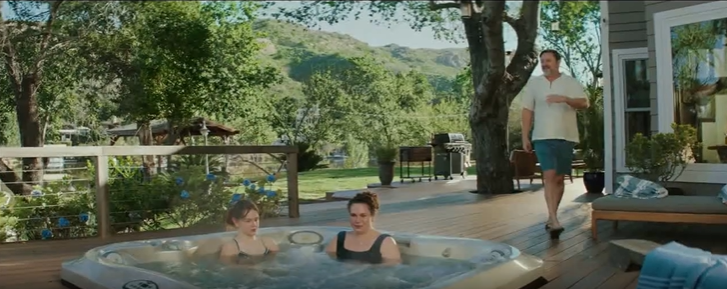
The backlash was swift. Viewers on Reddit and Instagram criticized the ad for relying on a tired trope — the bumbling, excluded dad — for a cheap laugh. The sentiment was familiar enough to have its own vocabulary online.

What’s notable is not that the ad misfired. It’s what Vrbo did next. The spot does not appear on Vrbo’s own YouTube or Instagram. The company eventually posted a softer, reworked version to its Facebook page with no acknowledgment of the original. It was a quiet retreat — the second time in under a year that Vrbo had to walk back a TV campaign. The Saban spot, pulled after a formal NAD complaint from Airbnb in 2025, was the first.
The pattern matters. Two high-profile TV campaigns, two costly retreats. For Vrbo, traditional broadcast advertising has consistently become a source of regulatory and reputational risk rather than brand equity.
The Tagline Nobody Announced
On March 31, 2026, Vrbo published a new summer ad on YouTube. The spot itself — sun, pools, families, aspirational leisure — follows a template the platform has used before. But at the end, something new appeared: “If you know, you Vrbo.”
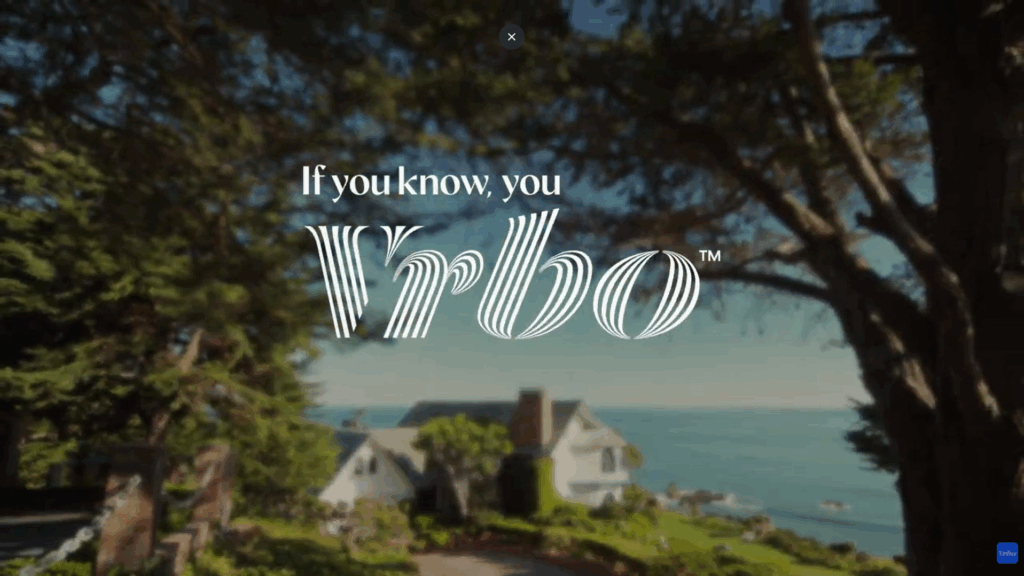
No press release. No campaign announcement. No explanation.
The phrase borrows from “if you know, you know” — a cultural shorthand for in-group fluency, for things that don’t need to be explained to the right audience. It’s a sharp departure from Vrbo’s previous taglines. “Where families travel better together” explained the platform’s value. “If you know, you Vrbo” assumes you already know it.
That assumption is doing a lot of work. It means Vrbo is no longer speaking to the undecided traveler who needs to be persuaded. It’s speaking to someone who has already made up their mind — and signaling to everyone else that there’s a club, and they can join it.
From Fighting Airbnb to Ignoring It
Read alongside the Teenagers retreat and the Saban precedent before it, the new tagline completes a picture. Vrbo spent years trying to win the ad war against Airbnb — directly, loudly, and at significant cost when campaigns misfired. Now it appears to have decided the war isn’t worth fighting on those terms.
This is not the same as losing. Vrbo’s YouTube channel has quietly been stripped of its historical library of past commercials. What remains is new, visually driven content that looks less like advertising and more like a travel mood board — short vertical videos, creator partnerships, destination-focused imagery optimized for Instagram and TikTok rather than broadcast slots.
As Expedia Group CEO Ariane Gorin noted in the Q4 2025 earnings call, the shift to creator-led video has dramatically improved targeting efficiency: the B2C segment expanded its EBITDA margin by six points while actually cutting direct marketing spend by 5%. The economics of the new approach are working. The economics of the old approach — celebrity spots, billboards, comparative messaging — were delivering backlash and legal complaints.
What This Means for the Platform You’re Listing On
For professional property managers, Vrbo’s advertising evolution is worth watching for a reason that goes beyond brand curiosity.
The platform Vrbo is advertising toward — aspirational, visually fluent, not-needing-to-be-convinced — is also the guest it is engineering its product around. High-quality visual content, consistent delivery, professional presentation: these are the signals that Vrbo’s creator-led social content rewards, and the same signals its algorithm increasingly uses to surface listings.
The “If you know, you Vrbo” guest is not browsing casually. They are arriving with expectations already formed by the content they’ve seen. How well your listing photography, property presentation, and guest experience match those expectations matters more now than when Vrbo was still explaining to people what the platform was.
The ad wars are winding down. The standards war — between properties that look the part and those that don’t — is just getting started. For more on what Vrbo is requiring from operators to stay visible under its new standards, see our Q4 2025 reliability analysis.

Uvika Wahi is the Editor at RSU by PriceLabs, where she leads news coverage and analysis for professional short-term rental managers. She writes on Airbnb, Booking.com, Vrbo, regulations, and industry trends, helping managers make informed business decisions. Uvika also presents at global industry events such as SCALE, VITUR, and Direct Booking Success Summit.
Related Articles:
 Vrbo’s WeatherPromise: A New “Cash Machine” Designed to Monetize Guest Anxiety
 Airbnb’s Winter Olympics 2026 Strategy: Gen Z, Global Events, and the Long Game Beyond Bookings
 Beyond Q4 2025 performance: Inside Vrbo’s Plan to Win on Reliability (And Beat Airbnb)
 Croatia Signals Rental Limits, Maui Rejects Rezoning Lifeline, and Evanston Shifts to Discretion-Based Oversight