Airbnb Partners with CookUnity to Offer Chef-Prepared Meals via Airbnb Services
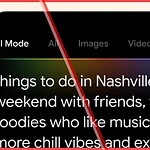
- Airbnb announced a partnership with CookUnity, a chef-led meal delivery service, to offer guests and locals in select U.S. states the ability to order ready-to-heat, chef-prepared meals directly through Airbnb Services.
- Meals are priced from $15, sold in curated bundles of three to six, and feature dishes created by well-known chefs including Esther Choi, Cat Cora, Ludo Lefebvre, and José Garces.
- The service launches across 20+ U.S. states, with plans to expand further across the U.S. and into Canada through 2026.
- According to Airbnb, the partnership is designed to add convenience and value for travelers, families, business travelers, and locals, extending Airbnb’s offering beyond accommodations into everyday services.
- Meals are delivered fresh in sustainable packaging and can be ordered both during a stay and at home.
Snigdha’s Views
- Unlike last year’s Instacart kitchen-stocking pilot, which explicitly involved hosts through payouts and incentives, the CookUnity partnership is fully platform-controlled and guest-facing.
- Hosts are not part of the value chain, and there is no mention of revenue sharing or listing-level integration.
- This creates a potential challenge for hosts and property managers who already offer food-related add-ons such as welcome meals, private chefs, catering partnerships, or curated local dining experiences.
- When Airbnb surfaces a centralized, app-native option like CookUnity, it risks crowding out host-led services.
- More broadly, the move reinforces a growing pattern: Airbnb is expanding its role in the guest journey beyond accommodation, but not every service expansion is designed to generate host income.
- Hosts can try to differentiate proactively by clearly communicating any food offerings, welcome meals, or local partnerships they provide, so guests don’t default to the app option.
- The key is recognising which Airbnb initiatives are host-enabled and which are platform-only, as that distinction increasingly shapes where hosts can participate — and where they must adapt.
Airbnb Reveals Its Most Viral Listings of 2025
- Airbnb published a list of the 10 most viral listings of 2025, based on engagement across Instagram and TikTok, including likes, comments, shares, and impressions.
- According to Airbnb, the listings that performed best on social media share common traits: strong immersion in nature, distinctive design, and experiences centred on slowing down and disconnecting.
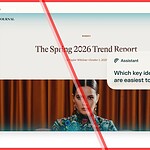
- Among the most shared properties are a cabin suspended over a glacial river in North Cascades National Park (Washington), a DC-6 airplane converted into a home in Alaska, and Star of the Wild in Colorado, where guests can sleep outdoors under the stars.
- Spa-focused retreats such as Birch Falls cabin in New York, along with immersive architectural homes like El Nido de Quetzalcóatl near Mexico City, also feature prominently.
- European and international standouts include Civico 65 Garda Holiday in Italy, a modern luxury apartment overlooking Lake Garda, and Gilay Estate in rural Australia, which blends contemporary design with wide-open countryside.
- Airbnb notes that social media plays an increasingly important role in travel inspiration, particularly for Gen Z, and that these listings gained traction not because of destination popularity alone, but because they translated well visually and emotionally on social platforms.
Snigdha’s Views
- This list is less about individual properties and more about what kind of stays are capturing attention online.
- The strongest signal is that demand is being shaped earlier in the travel funnel, on social feeds, not search results. Nature-forward settings, visually distinctive design, and a clear promise of calm or escapism are consistently outperforming generic, hotel-like inventory.
- More broadly, this reinforces that social media is now a demand signal, not just a marketing channel. Listings that are visually legible in a single image or short video have an advantage in influencing where guests want to go in the first place.
- For PMs, this is a cue to audit listings not just for amenities and pricing, but for whether they tell a compelling story that can stop the scroll and create aspiration.
San Diego Weighs $8,000–$12,000 Annual Tax on Short-Term Rentals and Second Homes
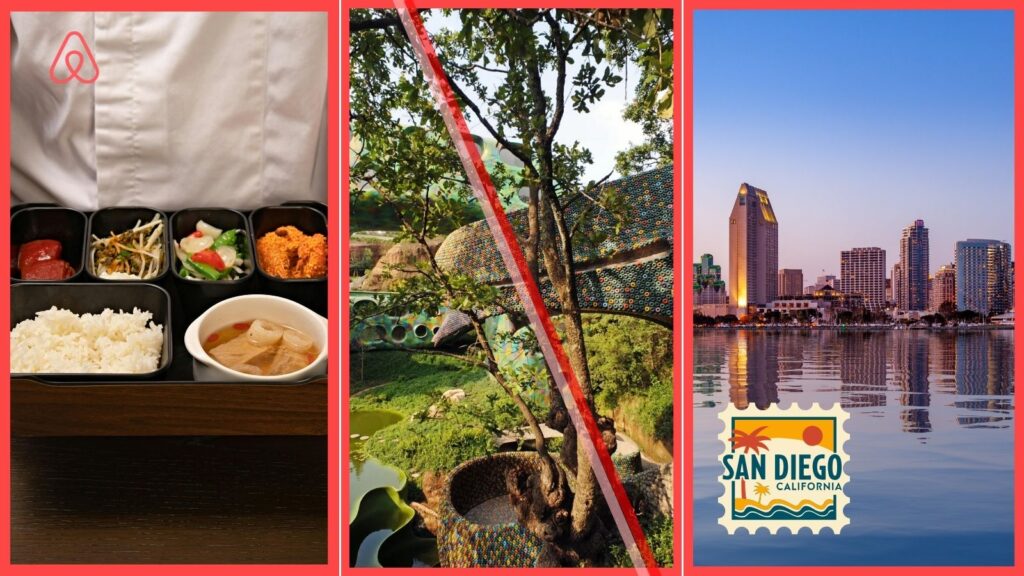
- San Diego officials are considering a proposed ballot measure that would introduce an annual $8,000 tax on most whole-home short-term rentals and vacant second homes, with an additional $4,000 surcharge for corporate-owned vacation homes.
- The revised proposal, introduced by City Councilmember Sean Elo-Rivera, removes an earlier per-bedroom levy and instead applies a flat tax per home, regardless of size.
- The measure would exempt home-sharing hosts who rent out a room or rent their primary residence for fewer than 20 days per year.
- According to city estimates, around 11,000 properties could be affected, including year-round STRs and largely unoccupied second homes.
- City officials argue the goal is to return housing stock to the long-term market rather than maximise tax revenue, with projected annual revenue of roughly $90 million if passed.
- The proposal faces opposition from vacation rental hosts, Airbnb, and the San Diego Regional Chamber of Commerce, who argue it would disproportionately impact local residents and the tourism economy without guaranteeing more housing supply.
- The measure is expected to be reviewed by the City Council’s Rules Committee before a potential June 2026 ballot vote.
Snigdha’s Views
- San Diego’s proposal clearly signals which STR models cities are willing to tolerate. Home-sharing and limited-use rentals are protected, while whole-home, year-round STRs and second homes, particularly corporate-owned ones, face meaningful recurring costs.
- For property managers, this changes the economics. An $8,000–$12,000 annual fixed cost can’t be offset through optimisation alone and must be supported by higher ADRs, stronger occupancy, or a shift toward mid-term use. Lower-performing listings in high-visibility coastal markets become harder to justify.
- One of the trends PMs should already be planning for is: in politically sensitive urban markets, regulation is shaping portfolio quality, not just supply. Operators built on yield and flexibility will be more resilient than those built on volume.

Snigdha Parghan is a Content Marketer at RSU by PriceLabs, where she creates articles, manages daily social media, and repurposes news and analysis into podcasts and video content for short-term rental professionals. With a focus on technology, operations, and marketing, Snigdha helps property managers stay informed and adapt to industry shifts.