For years, Vrbo told professional property managers the same thing: earn your visibility. Hit the right review scores, keep your cancellation rate down, accept bookings consistently, and the algorithm will reward you with placement. No ad budget required.
Looks like that is now changing.
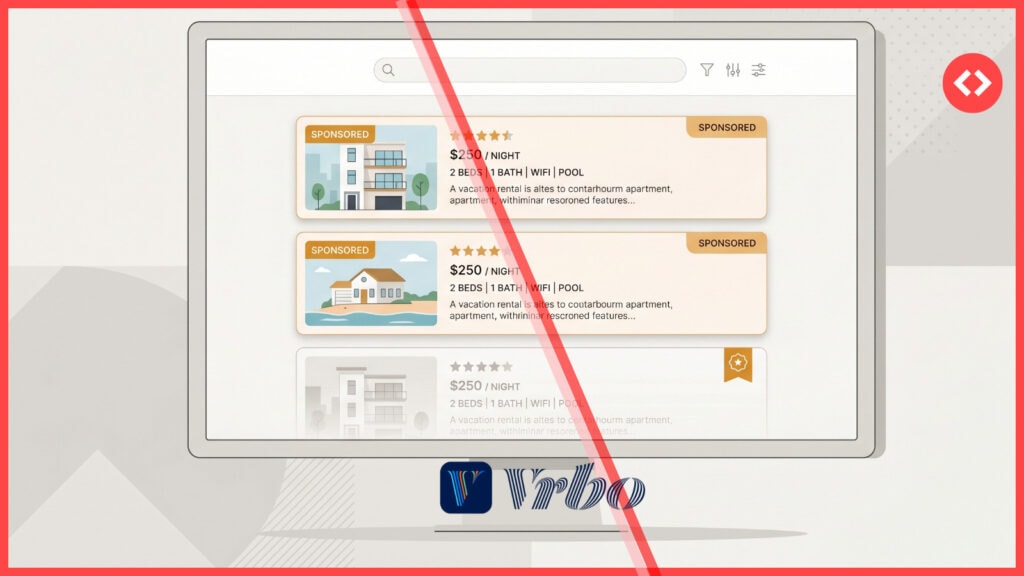
Expedia Group has confirmed it is piloting a Vrbo sponsored listings feature, letting hosts and property managers pay for elevated placement in traveler search results. The move brings the pay-to-play mechanics long used by traditional hotel booking platforms into the vacation rental space, and lands just months after Vrbo made earning organic visibility significantly harder.
What Are Vrbo Sponsored Listings?
Operators will be able to pay to appear higher in search results
The mechanics mirror what hotel and apartment operators have navigated on Booking.com and Expedia for years. Property managers will set a budget and bid for premium placement in search results, pushing their listings above organic rankings in competitive markets.

Expedia Group has not yet disclosed full commercial terms, exact pricing models, or how sponsored listings will be labeled for travelers in search results. What is confirmed: the feature is live in testing, a wider launch is planned for before the end of 2026, and Tim Rosolio, Expedia Group’s VP of Vacation Rental Partnerships, has described early results as working “absolutely fantastic.”
Sponsored Vrbo listings are expected to eventually appear on Expedia.com
Because Expedia Group is migrating all its brands onto a unified technology platform, sponsored vacation rental listings are expected to surface on Expedia.com over time, reaching travelers who begin searching for hotels or flights rather than those already looking for a vacation rental.
This is part of how Vrbo made money in Q1 2026
Rosolio has framed the sponsored listings pilot within Vrbo’s broader 2026 revenue picture. In Q1 2026, roughly one-third of Vrbo bookings already involved some form of supplier-funded promotion. Sponsored listings represent the next layer: search visibility itself becoming something Vrbo sells, rather than something operators earn.
What Changed With Vrbo’s Premier Host Program in January 2026
Vrbo made earning organic visibility significantly harder at the start of the year
On January 1, 2026, Vrbo overhauled its Premier Host program and introduced a new Performance Milestones framework. The changes were significant. Vrbo moved from evaluating operators at the account level to assessing each listing individually, and the criteria for the Premier Host badge became considerably more demanding.
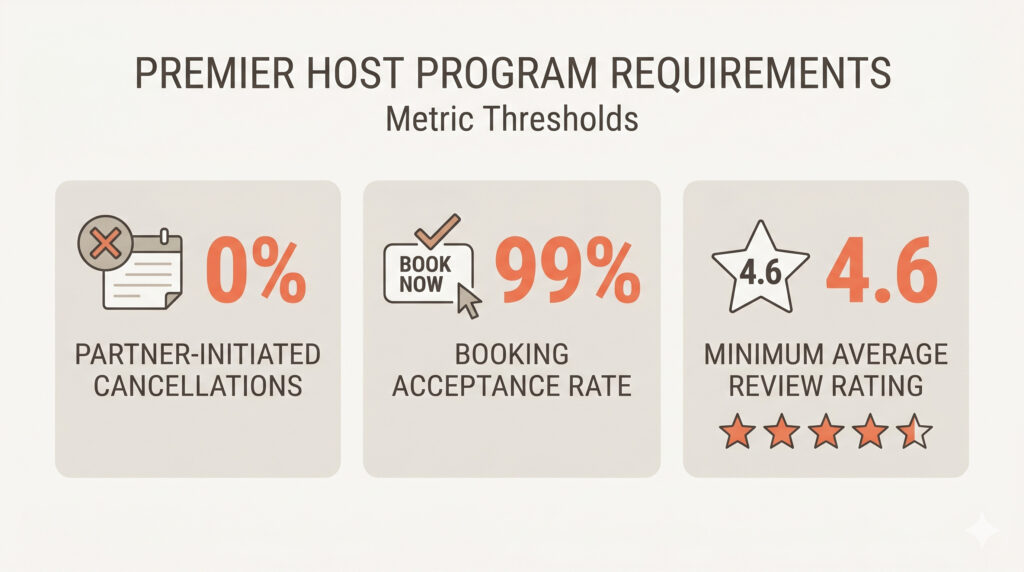
To earn it, listings must now maintain:
- A 0% partner-initiated cancellation rate
- A 99% booking acceptance rate
- A minimum 4.6 review score
These are not soft benchmarks. A single host-initiated cancellation can cost a listing its badge. A 99% acceptance rate leaves almost no room to decline a booking without algorithmic penalty. Operators rebuilt processes and absorbed difficult bookings specifically because Vrbo’s stated reward was better organic placement in search results.
The deal Vrbo made: hit these numbers, and we put you higher on the page
That was the premise. Operational perfection in exchange for search visibility. Property managers who spent the first half of 2026 grinding toward those metrics did so with that return clearly in mind.
The introduction of sponsored listings doesn’t technically break that deal. It does, however, quietly change what it’s worth.
How Sponsored Listings Change the Value of a Premier Host Badge
Paid placements take the top slots, organic results move down
Search result pages have a fixed amount of space. When the top positions go to paid placements, organic results, including those boosted by Premier Host status, get pushed further down the page. An operator who earned their position through flawless metrics now sits below operators who simply opened their wallets.
The exact degree of displacement will depend on how Vrbo implements the feature, including how many sponsored slots appear per search and how they are distributed across markets.
A lower-rated property could outrank a Premier Host just by spending more
Under a bidding model, an operator with a 4.2-star rating and a history of cancellations could theoretically outrank a flawless 4.9-star Premier Host in the same market, not through performance, but through ad spend. Whether Vrbo introduces quality thresholds that restrict ad eligibility to listings above a certain performance tier will be one of the most consequential details to watch as the rollout unfolds.
In mature OTA ad markets, top-performing hosts end up buying ads just to defend the ground they already earned
This is the pattern that has played out on other major platforms. Operators who ranked well organically found that once competitors started buying sponsored placements, their organic ranking alone no longer held. Maintaining visibility meant adding an ad budget on top of the operational standards they were already meeting.
If that dynamic takes hold on Vrbo, Premier Host status stops functioning as a visibility reward. It becomes the entry requirement to compete in an advertising auction.
How the Financial Risk Works With Sponsored Listings
Vrbo’s existing promotions share the downside; sponsored listings put the risk entirely on the operator
| Tool | How it works | Who carries the risk |
|---|---|---|
| Supplier-funded promotions | Operator discounts nightly rate in exchange for an algorithmic boost | Shared: operator only pays more if a booking occurs |
| Sponsored listings (CPC) | Operator pays per click on their listing | Operators pay regardless of whether the traveler books |
Vrbo’s current promotional tools tie the operator’s extra cost to a completed booking. Under a cost-per-click model, the operator pays for every visitor who clicks, converting or not. The financial risk of a traveler browsing without booking shifts entirely to the property manager.
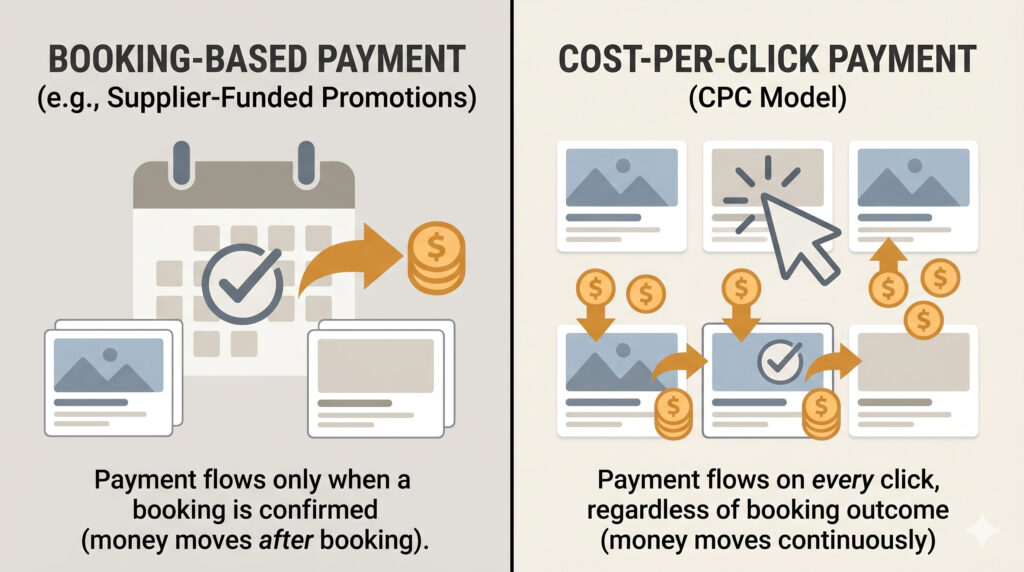
In high-demand periods with strong conversion, that is a manageable trade-off. In slower markets, or for listings that are harder to convert, the exposure is real.
What This Means for How Operators Think About Vrbo Distribution
The true cost of a Vrbo booking is about to get harder to calculate
Right now, the cost of distribution on Vrbo is largely commission-based and relatively predictable. Adding an ad spend layer changes the math. Operators in competitive markets will need to factor click costs into the full picture of what a Vrbo booking is actually costing them, and whether that total still holds up against other channels, including direct booking.
If Vrbo gates ad access behind performance tiers, the Premier Host badge becomes the price of entry to advertise
This is the scenario worth watching. If Vrbo requires listings to hit a minimum milestone tier before they can buy sponsored placements, the badge stops being a reward for operational excellence and starts being a prerequisite for advertising access. Operators who have been maintaining those metrics as a path to visibility will have been, in effect, qualifying themselves for the right to spend more money on the platform.
The competitive landscape for Vrbo ad placements hasn’t fully formed yet
Vrbo’s pilot is still early. Operators who enter OTA ad programs before broader market competition develops have historically faced lower effective costs, bids go up as more participants enter the auction. That window doesn’t stay open indefinitely.
The Bottom Line
The Premier Host badge still has value. Strong performance metrics are likely to remain a prerequisite for advertising access, and organic visibility isn’t disappearing. Vrbo has a clear interest in maintaining search quality.
But what the badge represents has shifted. Hitting a 0% cancellation rate used to be how an operator got to the top of the page. Increasingly, it looks like how they earn the right to pay to get there.
How much that costs, and whether the return makes sense for a given portfolio, depends on commercial terms Expedia Group has yet to release. RSU will be following the rollout closely.
A separate RSU analysis covers the broader shift of OTA platforms toward advertising network models — including what the launch of BKNG Ads means for how Booking.com and Expedia are competing for the same distribution infrastructure.

Uvika Wahi is the Editor at RSU by PriceLabs, where she leads news coverage and analysis for professional short-term rental managers. She writes on Airbnb, Booking.com, Vrbo, regulations, and industry trends, helping managers make informed business decisions. Uvika also presents at global industry events such as SCALE, VITUR, and Direct Booking Success Summit.