
Four takeaways
- Céline Dion is the occupancy story. From 25 September on, the market around the Celine Dion Concert 2026 arena runs 4 to 6 points better than Paris as a whole against last year’s booking pace, on every later concert weekend, including the ones after the Pope has left France.
- The Pope weekend’s lift sits in Neuilly, not at the arena. Compared with the previous Céline weekend at the same number of days before arrival, the weekend he is in town is about three points ahead across Paris, about seven in Neuilly-sur-Seine, the last town before the ring road and the nearest to the Mass, and level in the three towns around the arena.
- Prices did not move for the Pope. In each of the four towns near Paris, guests on the papal weekend paid the same as the week before, and hosts did not change their asking prices. The wider West Paris data shows a jump of 11% to 18% in the typical booked price, but that is an illusion of aggregation: Neuilly, the dearest town, took a bigger share of the weekend’s bookings, and that alone lifts the combined figure.
- Neither event fixes the real problem, which is the weekdays. Paris is having a slow September, six to seven points behind last year across the city and its western suburbs, and the guests who are missing are the Monday-to-Thursday business travellers, whom no concert and no Mass brings back.
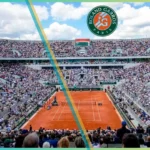
Two giant events, one weekend, and the obvious expectation is that accommodation should be squeezed. The data is more interesting than that. On Friday 25 and Saturday 26 September, Céline Dion plays the sixth and seventh of her sixteen autumn nights at the Plenitude Arena in Nanterre, the 40,000-seat hall that was Paris La Défense Arena until an energy company bought the name in July. The same Friday evening, Pope Leo XIV holds a vigil with 80,000 young people at the Stade de France, and the same Saturday afternoon he says Mass at Concorde for a crowd the French bishops now put at 500,000 to 600,000. And one week earlier, on 18 and 19 September, she played the same Friday and Saturday with no Pope in Paris. Call them the Céline-only weekend and the overlap weekend. Same singer, same weekdays, same local market, and then one very large city-wide event added on top, which is not a laboratory but is a good deal better than staring at an attendance forecast and assuming it turns into beds.
Both of them chose Paris, and Paris chose them back
Neither of these is an ordinary booking of a big venue, and the why is part of the demand.
Céline Dion came home, and the city threw her a street party
Céline Dion could have done this anywhere and chose Paris: she has been singing to the French in their own language since she won Eurovision for Switzerland in 1988 at twenty, her 1995 album D’eux is still the best-selling French-language record ever made, and when Paris needed one voice for the opening of its Olympics in July 2024 it put her alone on the Eiffel Tower, in the rain, for “L’Hymne à l’amour”, her first public performance since she announced in 2022 that she had stiff-person syndrome, a rare neurological condition, and stopped touring.

These sixteen nights are her first full concerts in more than six years, given in Nanterre rather than Las Vegas, which is why nine million people entered a lottery for tickets that sold out in hours and why the audience is flying in from Houston and São Paulo as well as Toulouse. And Paris loves her back, loudly. Posters carrying nothing but her song titles, “Pour que tu m’aimes encore”, “The Power of Love”, went up across the city before the residency was even announced.
Two nights before her first show, 2,600 people packed the Grand Rex for a Céline karaoke and, in the words of one of them, sang off-key and owned it. And on the eve of the opening night the City of Paris itself turned the Place de Stalingrad into a free karaoke for 10,000, two sessions, with fans asked to come in the wig, the gloves and the dark glasses. Cities do not throw street parties for a concert booking; they throw them for someone they consider theirs.
Pope Leo XIV is the first pope to visit Paris since 2008
The Pope is a rarer visitor still. Leo XIV, elected in May 2025 and the first American to hold the office, is making his first visit to France, which likes to call itself the eldest daughter of the Church, and the first papal visit to Paris since Benedict XVI in 2008 (Francis came to Strasbourg, Marseille and Corsica, and never to the capital); on the Friday evening he prays Vespers in Notre-Dame, the first pope inside the cathedral since it reopened after the fire, and on the Saturday he says Mass in the open air at Concorde for the largest papal crowd the country has seen in a generation.
The bishops have been counting registrations for that Mass at 8,000 a day, Paris parishes have been asking their congregations to open a spare room to pilgrims from the provinces, and a procession on foot through the Latin Quarter on the Friday afternoon will put him within touching distance of anyone who wants to be there. That the two land in the same city on the same two days is nobody’s plan, just two calendars colliding, and it will not happen again in the working life of anyone reading this.
We looked at Paris and at the suburbs around the arena, which are not Paris
Paris is smaller than you think
A word on geography, because it matters here. Paris proper is small: 2.1 million people on 105 square kilometres, a little under twice the size of Manhattan and about a fifteenth of Greater London. Its city limit is the périphérique, the ring road, and everything outside that road is administratively “not Paris”, including towns you can see from the top of the Arc de Triomphe. If Paris were organised like London, Neuilly-sur-Seine would be Kensington, the office towers of La Défense in Puteaux and Courbevoie would be Canary Wharf, and Nanterre, with the arena, would be Stratford; if it were New York, they would be Brooklyn Heights, the Jersey City skyline and Long Island City. In practice the arena is a fifteen-minute métro ride from the Champs-Élysées, and a Parisian would not think twice about calling any of these towns Paris. The data does, and so must we.
The data covers West Paris, Paris itself, and each of the four towns on its own
We looked at three things in PriceLabs’ Market Dashboards, which are built on Airbnb listings. First, West Paris: the ring of suburbs around the arena just outside the city limits, from Nanterre and Puteaux through Courbevoie to Neuilly-sur-Seine and their neighbours on the same RER line, about 8,800 active listings. Second, Paris itself, the 63,000 listings inside the ring road, which tells us whether something is happening to the whole city or only to the arena’s neighbourhood. Third, each of the four towns on its own, about a thousand listings apiece, as a check on the wider picture. Every number is from the snapshot PriceLabs took on 10 September 2026, and “last year” means the same weekday a year earlier as it stood on the same day a year earlier, so a half-booked September is never compared with a finished one.
Paris is having a soft September, with or without them
Start with the baseline, because it changes how everything else reads. For September as a whole, occupancy in West Paris is running at 50.0% against 56.1% at the same point last year, about six points behind. Paris as a whole is at 64.3% against 71.0%, nearly seven behind. So the market around the arena is not uniquely weak; the whole city is soft, and that makes any place where West Paris pulls away from Paris worth looking at closely.
Céline Dion Concert 2026 is the occupancy story, and the arena’s suburbs beat Paris on every later concert weekend

Here is the thing: there is a Céline-shaped pattern in the data, and it is not the one weekend you would expect. On 18 and 19 September, her first weekend with a show on both the Friday and the Saturday, West Paris is about 9 points behind last year’s pace and Paris about 8 behind, which is to say no local outperformance at all. Then, from the next weekend on, West Paris pulls ahead of the city and stays there.
| Céline weekend (Fri–Sat) | West Paris vs same weekend last year | Paris vs same weekend last year | West Paris’s advantage over Paris |
|---|---|---|---|
| 11–12 September (show on the Saturday only) | -4.9 pts | -6.5 pts | +1.6 |
| 18–19 September | -9.1 | -7.7 | -1.4 |
| 25–26 September (Pope in Paris) | +2.9 | -3.1 | +6.0 |
| 2–3 October | -2.4 | -8.2 | +5.8 |
| 9–10 October | +2.1 | -3.0 | +5.1 |
| 16–17 October | +8.2 | +4.1 | +4.1 |
| Non-Céline weekends, for comparison: 4–5 Sept, 23–24 Oct, 30–31 Oct | +1.6, +0.5, -1.3 |
On the four later concert weekends, the market around the arena performs 4 to 6 points better than Paris relative to last year, and on weekends when she is not playing the difference is within a point or two either way. Our reading, and it is only that: this is the strongest evidence we have for a local residency effect, not because one weekend happens to be strong, but because the market around her venue repeatedly does better than the city on later concert weekends, and keeps doing so after the Pope has gone home.
Can we say Céline Dion Concert 2026 created exactly five points of occupancy? No. Other things happen, the data is observational, and the fact that the advantage appears on later weekends rather than earlier ones suggests part of it is simply that concert-goers book further ahead than the business travellers who filled this market last September. And it holds town by town: in each of Nanterre, Puteaux, Courbevoie and Neuilly, her concert nights run between 9 and 20 points above the other nights of the month. The repeated pattern makes her the cleaner occupancy signal of the two events, visible not just in searches and headlines but in nights actually sold.
The weekend the Pope arrives is ahead too, but the lift sits in Neuilly, not at the arena
At first glance, almost nothing. Occupancy around the arena on 18 and 19 September, the Céline-only weekend, is 47.9% and 47.0%; on 25 and 26 September, with the Pope in town, it is 47.6% and 47.0%, which is identical to the point. Except that the comparison is unfair to the overlap weekend, because on 10 September it was still fifteen days away while the Céline-only weekend was eight days away, and a date fills up as it gets closer.
The fair comparison is where the Céline-only weekend stood when it, too, was fifteen days out, and PriceLabs’ record of bookings and cancellations lets us work that out: about 43.6% and 43.2%. So at the same distance from arrival, the overlap weekend is about four points ahead of the previous Céline weekend. That is real.

But run the same comparison across Paris and then town by town, and the four points turn out to live in one place. Paris as a whole is about three points stronger on the later weekend (60% for the Céline-only weekend at fifteen days out, against 63% for the overlap weekend now).
Neuilly-sur-Seine, the chic, expensive town pressed against the ring road on the Paris side of West Paris, the one a visitor would choose if they wanted to be near the Champs-Élysées without paying Champs-Élysées prices, is about seven points stronger, 6.7 on the Friday and 7.9 on the Saturday. And Nanterre, Puteaux and Courbevoie, the three towns that actually surround the arena, are flat, within about a point of where the Céline-only weekend stood at the same distance from arrival.
So the Pope weekend’s footprint fades with every stop away from the Mass: seven points at the city’s edge, three across the city, nothing at the arena. If Paris were London, he filled Kensington and not Canary Wharf. Céline plays both weekends and cannot be the difference, and a lift that is strongest nearest the Mass and absent at the arena does point at the visit; but the data cannot say who those Neuilly bookers are, so we will not write “the Pope added seven points”. What we can write is that the weekend the Pope is in Paris books ahead of the previous Céline weekend in Paris and in Neuilly, and not around the arena at all.
Half a million people barely register because most of them never need a bed
Why does a crowd that size leave so light a mark? Because of how it travels, and where it lands. The pilgrims are overwhelmingly French and they are being moved by professionals: dioceses are running day-return coaches (Rennes charges €80 a seat, leaving early on the Saturday and back the same night), the trains from Lille, Reims and Orléans put the Mass inside a day trip for much of northern France, Paris parishes are putting people up on sofas, and the 80,000 young people at the Friday vigil had to register in advance and are lodged the way youth pilgrimages customarily are, in groups, in parish halls and school gyms.
Attendance at the Mass is free and unticketed, and the 475,000 registrations the bishops had counted by 8 September are a planning tool, not a booking of any kind. So most of that crowd is organised to be home the same night, and the part of it that does stay is spread across a region of twelve million people and 63,000 Paris listings, where tens of thousands of extra guests spread thin. Paris proper may be small on the map; as a lodging market it is enormous, and it swallows crowds.
Lourdes and Metz show what the same visit does to a small town

The proof is on the same trip. In Lourdes, where the Pope says Mass on the Sunday, registration was capped at 150,000 and filled, France 3 found the remaining hotel rooms at up to forty-six times their normal rate, and Airbnb’s own figures for the town say 89% of bookings for the visit are French, half are for a single night and three-quarters are groups, which is to say exactly the crowd that leaves no trace in Paris.
In Metz, his last stop, central hotels were close to 90% booked by late August against under 20% at the same point last year. Same man, same trip, and the difference is that Lourdes is a town of thirteen thousand with one hotel district and no way home the same night, while Paris is a region of twelve million with a coach park. A crowd fills beds when it has to sleep where it stands; in Paris it does not have to, and in Lourdes it does.
Prices did not move for the Pope, whatever the wider data seems to say
Now the money, which is where the wider data nearly fooled us. In the wider West Paris market, the typical booked price for the Céline-only weekend is €157 on the Friday and €148 on the Saturday, and for the overlap weekend it is €175 on both nights, up 11% and 18%, with asking prices unchanged; across Paris the same comparison moves the typical booking from about €178 to €181, about 2%. On its own, that looks like a papal price premium next to the arena, and the most striking number in the dataset.

Then we pulled the four towns separately, and none of them has it. In Nanterre, Puteaux, Courbevoie and Neuilly, the typical booked price on the papal Friday is within one percent of the Céline Friday’s or below it, and the same on the Saturday, and asking prices are flat everywhere.
The jump exists only when the four towns and their neighbours are pooled together, and the reason is Neuilly. It is the dearest of the four by a distance, the kind of address where the 16th arrondissement continues without the Paris postcode, and on the papal weekend its occupancy jumped seven points while the others stood still, so Neuilly’s bookings make up a larger share of the pool that weekend, and a pool with more Neuilly in it has a higher typical price even though no town’s prices moved.
The apparent premium is Neuilly’s extra bookings seen through a wider lens. That is worth knowing beyond this weekend, because it is how a real occupancy effect in one expensive neighbourhood turns into a phantom price effect for a whole market, and it is the kind of thing a manager pricing off a city-wide dashboard will see and act on.
It is not a wave of one-night pilgrims
A huge Saturday gathering suggests an obvious explanation, people booking one night, attending the Mass and going home, and we checked: there is no visible shift toward one- or two-night stays around the arena on 25 and 26 September, nor across Paris, and the mix of stay lengths is the same on both weekends. The data cannot say why anyone booked, so it does not mean pilgrims are absent from short-term rentals; it means the Pope weekend is not producing a new wave of short bookings.
It is a head start, not a late rush
Over the last seven days, new bookings minus cancellations added about 4 points of occupancy to each night of the Céline-only weekend and about 4 points to each night of the overlap weekend, so the overlap weekend’s lead was built earlier and is not widening through a last-minute rush. Cancellations on the overlap weekend are also running at roughly twice the Céline weekend’s rate in every town, which is what it looks like when people who booked just in case firm up their plans. And two weeks is a long time in this market: the equivalent Friday and Saturday last September were about 44% booked at this point and finished at about 73%, so today’s 47% is a starting position, not a result, and we will publish the final numbers next to it after the weekend.
Neither of them brings back the weekday guest, and that is where the month is being lost

There is a pattern that is easy to miss while Céline Dion and the Pope take the headlines. West Paris is not losing most of its ground on event weekends; the bigger year-on-year gap is Monday to Thursday, where September nights are running about 7 points behind last year against about 4.5 points for Friday to Sunday.
The shape of demand has changed: weekends are holding up, weekdays are not. Business travel and the congress calendar are the plausible explanation. Last September, when a single dermatology congress brought 17,000 delegates to Paris in one week, is the baseline the month is being measured against, but those are explanations, not findings from the rental data itself.
What the data does tell an operator is simpler: a major concert can strengthen a Saturday, a papal visit can strengthen one particular weekend, and neither brings back the Monday-to-Thursday business guest whose absence is what is making September slow.
So, is the Céline Dion effect bigger than the Pope effect?
On occupancy, yes: the residency is the clearer pattern, because the market around her venue repeatedly improves relative to Paris on the later concert weekends, in every town, including after the Pope has left France. The Pope weekend has a real footprint too, but a narrow one: seven points in Neuilly, three across Paris, none in the three towns around the arena. And the price jump that the wider data shows for that weekend is the same Neuilly lift wearing a different hat; in no town did prices move. We can see the patterns; we cannot perfectly assign the causes, and any occupancy effect specifically attributable to the Pope is small next to the attendance figures and confined to the side of the city that faces the Mass.
The fact: two weeks out, the overlap weekend is ahead of the previous Céline weekend, compared at the same distance from arrival, in Paris and in Neuilly, level in the towns around the arena, and priced the same as the week before in every one of them. The month is running six to seven points behind last year across Paris and its western suburbs, mostly on weekdays.
Our reading, and it is only that: a crowd matters to your calendar when enough of its members come from outside the destination, need to stay overnight, compete for the same beds and cannot easily go home after the event. The pilgrims fail three of those four tests in Paris and pass all four in Lourdes; Céline’s audience, by Amadeus’s count of flight searches, is led from the United States, Brazil and Canada and passes them by definition. That is why thirty thousand a night can matter more to a local market than half a million in an afternoon, not because concert fans are better guests but because attendance and overnight demand are different things.
What to do, then? If I were managing listings around the Plenitude Arena this month, I would not discount 25 and 26 September just because occupancy is still under 50%, because this market fills late and the Céline weekends are doing what they should; I would hold my price and watch the bookings and the cancellations come in.
If my listings were in Neuilly, I would know I have a head start the rest of West Paris does not, and hold a little harder. And I would not price anything as though hundreds of thousands of people at Concorde guarantee a squeeze, because the data does not show one, not at the arena and not on the rate card. Market data gives you the context; your own pacing tells you what to do. Attendance is the headline number, and overnight demand is the one you get paid on.
Quick answers
Is Céline Dion COncert 2026 increasing short-term rental demand around the Plenitude Arena?
The PriceLabs data shows a recurring local pattern on the later weekends of her residency: the market around the arena performs about 4 to 6 points better than Paris as a whole against last year’s booking pace on every concert weekend from 25 September on, and within a point or two of Paris on weekends when she is not playing. That is consistent with a local residency effect, though the data cannot assign every booking to the concerts.
Is Pope Leo XIV’s visit increasing short-term rental occupancy in Paris?
A little, and mostly on the side of the city nearest the Mass. Compared with the previous Céline weekend at the same number of days before arrival, the weekend of 25 and 26 September is about three points ahead across Paris and about seven points ahead in Neuilly-sur-Seine, the last town before the ring road; in the three towns around the arena it is level. The data cannot isolate a specific effect for the papal visit.
Are booked rates higher when Céline Dion and Pope Leo XIV overlap in Paris?
Not in any town. In Nanterre, Puteaux, Courbevoie and Neuilly, guests on 25 and 26 September paid the same as on the previous Céline weekend, and asking prices are flat. The wider West Paris market shows a typical booked rate 11% to 18% higher, but only because Neuilly, the dearest town, took a bigger share of that weekend’s bookings. Across Paris the increase is about 2%.
What is the Plenitude Arena?
The new name, since July 2026, of Paris La Défense Arena in Nanterre, west of Paris. Both names refer to the same venue.

Thibault Masson is a leading expert in vacation rental revenue management and dynamic pricing strategies. As Head of Product Marketing at PriceLabs and founder of Rental Scale-Up, Thibault empowers hosts and property managers with actionable insights and data-driven solutions. With over a decade managing luxury rentals in Bali and St. Barths, he is a sought-after industry speaker and prolific content creator, making complex topics simple for global audiences.