
The same week Airbnb inserted AI into every step of how guests find and evaluate your listing, Expedia did the same for Vrbo — and the tools they announced raise a question neither platform has answered: who’s responsible for making sure of your Vrbo listing optimization?
At Explore 2026, its annual partner conference in Las Vegas, Expedia announced natural language search for Vrbo, AI comparison and Q&A tools for Hotels.com, and a string of AI-powered features for the Expedia brand — plus named answer engines like ChatGPT and Perplexity as its fastest-growing channel. Taken together, it’s yet another signal that the AI shift we traced through Airbnb’s Summer Release isn’t one platform’s story — it’s the whole industry moving at once.
Everything Expedia Announced — and Where It Actually Applies
Expedia Group operates multiple brands, and the announcements at Explore 2026 were not uniform across them.
What unites all of these features, though, is a single mechanic: an AI sits between the guest and your listing, reading it before any human does. The features differ by platform and use case.

The underlying logic is the same across all of them — structured listing data is the input, and what the AI can extract from it determines what the guest sees.
Confirmed for Vrbo
Natural language search — Guests describe what they want in their own words instead of setting filters. Expedia’s own example: “a pet-friendly lake house with a dock near Austin for a laid-back friends getaway.” Already live in limited capacity on Vrbo, with a wider rollout confirmed for later this year. Expedia also confirmed this capability will expand to other brands beyond Vrbo.

Confirmed for the Expedia brand — Vrbo inventory may flow through these
Activity Planner — A conversational AI tool that turns open-ended trip descriptions into a personalized, bookable itinerary. Confirmed for Expedia brand later this year. Because Vrbo properties can appear in Expedia brand results, this could surface Vrbo listings as part of AI-generated itineraries. When it does, the stays the AI recommends will be the ones whose structured data maps to what the guest described — not the ones with the most compelling property prose.
Family Highlights — Surfaces family-friendly properties in search results. Confirmed for Expedia brand. This is directly relevant to Vrbo, whose core audience is families and groups booking whole homes. Whether Family Highlights will apply to Vrbo listings appearing on Expedia.com is not confirmed. But this is the through line in concrete form: a feature like this doesn’t read your listing description to decide if you qualify as family-friendly. It reads your amenity tags, your property type, your structured fields, and reviews.

Bundle & Save — Combines stays, flights, and car rentals with clearer savings. Confirmed for Expedia brand. Vrbo properties could be included as the stay component.

Buy Now, Pay Later expansion — More flexible checkout options, already live on Vrbo.
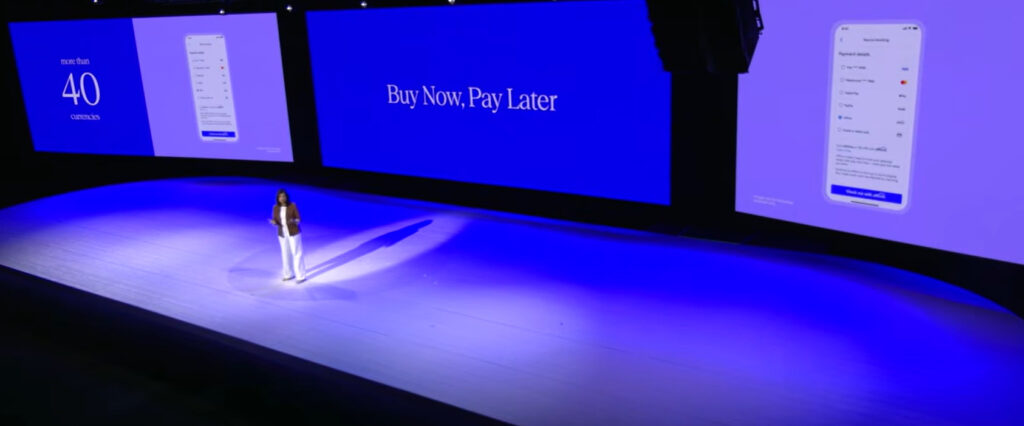
Package Price Insights — Signals when Stay + Flight package prices are typical or lower than usual. Confirmed for Expedia brand.
In-feed planning with Meta — Testing AI conversations on ads, letting travelers start planning with a single tap. Expedia and Meta collaboration, not platform-specific.
AI Property Compare — Lets guests compare properties on vibe, location, amenities, and trade-offs. Confirmed for Hotels.com, arriving later this year.
Property Expert — Answers specific property and neighborhood questions from listing data and guest reviews. Also Hotels.com only, later this year.

Business Profiles — Lets travelers set work-trip preferences to match them with the right stays. Hotels.com only, arriving July.

Quick Rebook — Streamlines repeat stays by making a past great experience the default option. Hotels.com only.
What This Actually Means for Vrbo Hosts
Natural language search changes what “optimized” means
For years, Vrbo optimization meant selecting the right amenity checkboxes. Natural language search doesn’t read checkboxes — it reads intent. A guest describing “a laid-back friends getaway” isn’t filtering for pet-friendly. They’re describing a feeling, a group dynamic, a context. The listings that surface will be the ones whose structured data maps to how people actually talk about what they want.
That doesn’t mean a well-written description no longer matters — it means the structured fields around it matter more than they ever have. An AI parsing a conversational query needs something concrete to match against. Amenity tags, location context, and property type are what it has to work with.
The same shift we covered for Airbnb’s natural language search applies here. The listing written for a human scanner is being replaced by a listing structured for an AI parser. Both platforms are moving in the same direction simultaneously.
Family Highlights is an Expedia brand feature — but Vrbo’s audience is exactly who it’s for
Family Highlights surfaces family-friendly properties in Expedia brand search results. Vrbo’s core use case — whole-home rentals for families and groups — maps directly onto this. Whether Vrbo listings will surface through Family Highlights on Expedia.com is not confirmed, but it is logical: Vrbo inventory already appears on Brand Expedia, and a feature designed to surface family-friendly stays is a natural fit for vacation rentals. Worth watching.
AI Property Compare is Hotels.com only — but the parallel to Airbnb is worth understanding
AI Property Compare and Property Expert were announced for Hotels.com only. Expedia made no statement about expanding these to Vrbo, yet.
That said, the mechanic is worth understanding regardless, because Airbnb announced the same feature in its Summer Release one day later. Both platforms are arriving at the same conclusion: guests shouldn’t have to read twelve listing descriptions to make a decision, and AI should do the shortlisting. On Airbnb, this is already headed toward your listings. On Vrbo, it isn’t confirmed yet — but the direction of travel across the industry is clear.
The Channel Most Hosts Aren’t Thinking About
Expedia CEO Ariane Gorin named answer engines — ChatGPT, Claude, Perplexity — as the company’s fastest-growing channel at Explore 2026. The share of total traffic from there is still small, but Expedia is actively investing to appear when users ask those platforms for travel recommendations.
Right now, that’s Expedia’s problem to solve at the platform level. But as we’ve covered in the context of AI travel booking agents and the Jobs-to-be-Done shift, the listings that surface cleanly inside those agents are the ones with complete, structured data. Platform-level presence and listing-level legibility are two different requirements — and only one of them is Expedia’s to handle.
Expedia Announced AI Tools for Guests. The Host Side Is Still a Question.
Every feature in the list above works the same way: it reads listing data. None of them perform better because a host wrote a more evocative description. The AI doesn’t care. It reads your tags, your fields, your images, your structured data — and surfaces what it finds there.
And yet neither Airbnb nor Expedia has announced anything to help hosts understand what that data should actually look like. There’s no listing readiness score, no dashboard showing which fields the natural language parser is reading, no signal to a host that their location context is too thin to match conversational queries.
The platform that builds that first — that makes optimization legible and achievable for professional managers rather than just theoretically possible — gets structurally better supply, which makes its AI features more accurate, which converts more bookings. As of Explore 2026, neither Expedia nor Airbnb has announced that.
The Grid Isn’t Just Wider Now — It’s Smarter
We described Expedia’s strategy earlier this month as a distribution grid: Vrbo inventory pushed outward through Uber, Delta, Revolut, Claude, and Brand Expedia, reaching guests wherever demand already lives. Explore 2026 adds a layer on top of that grid.
Distribution reach and AI legibility are now two separate requirements. Being in the right channels is one thing. Being readable by the AI that decides which listing to surface inside those channels is another. A listing can sit inside every surface Expedia’s grid reaches and still lose, if the AI reading it can’t match it to what a guest described.
The shift from listings written for humans to listings read by AI is already underway. Explore 2026 didn’t announce its beginning — it confirmed it’s no longer experimental. The grid keeps expanding. The AI layer is being built on top of it. And the question of who actually equips hosts to navigate both — Expedia, or nobody — remains open.

Uvika Wahi is the Editor at RSU by PriceLabs, where she leads news coverage and analysis for professional short-term rental managers. She writes on Airbnb, Booking.com, Vrbo, regulations, and industry trends, helping managers make informed business decisions. Uvika also presents at global industry events such as SCALE, VITUR, and Direct Booking Success Summit.
Related Articles:
 Airbnb Launches Co-Host Marketplace in Japan, Vrbo to Delist Poor Listings, Booking.com Bets Big on India and AI
 After A Strong Q4 2024, Vrbo Bets on Flexibility as Its Winning Strategy in 2025
 2026 Vacation Rental Trends: How Travel Is Becoming More Selective
 AI in Vacation Rentals: Build Your Own AI or Wait for Your PMS?