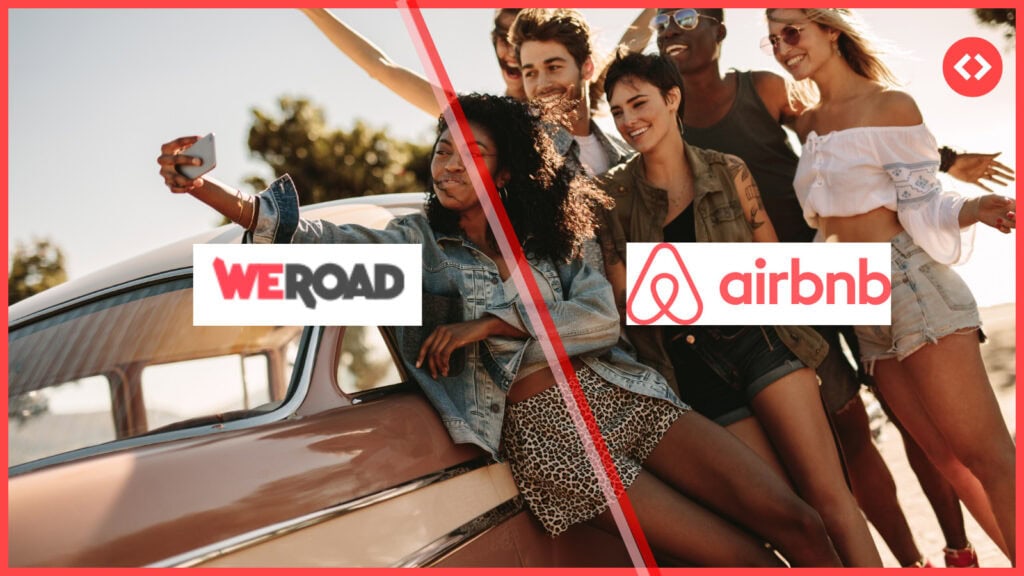
Airbnb announced a $58 million Series C investment in Italian adventure-travel startup WeRoad, taking a 10% equity stake and a board seat. Concurrently, Airbnb hired WeRoad CEO Andrea D’Amico to serve as its new Vice President of Hotels, replacing Jesse Stein.
On the surface, these moves address two separate corporate objectives: capturing the Millennial and Gen Z group travel market, and recruiting an 18-year Booking.com veteran to aggressively scale hotel supply.
However, analysing the transaction through the lens of Airbnb’s stated corporate strategy reveals a unified direction. CEO Brian Chesky has repeatedly positioned Airbnb as an antidote to modern loneliness. The WeRoad investment and D’Amico’s appointment demonstrate that Airbnb is now deploying capital to acquire the infrastructure required to build a real-life (IRL) social network.
Airbnb is no longer just talking about loneliness as a marketing theme. It is now writing checks to build the infrastructure of an in-real-life social network.

The $58M Stake Is a Departure From How Airbnb Usually Operates
Airbnb historically favors organic growth or light partnerships — such as its integrations with Timeleft and Welcome Pickups — to expand its non-accommodation categories. Taking a 10% equity position in a specialised tour operator indicates a structural shift. Airbnb is buying proven community mechanics.
What WeRoad sells
WeRoad sells curated group trips to Millennials and Gen Z travellers who do not want to travel alone — and who, more importantly, want to come home with friends. The headline metric is this: 60% of WeRoad customers rebook.

That is not a vacation rebook rate. That is a community rebook rate. A traveller booking once or twice a year is a vacation customer. A traveller coming back to the same brand to see the same kind of people is something else: a social-graph customer.
A traveller opens Airbnb, on average, very few times per year. The same traveller opens a social product weekly. That gap — between trip frequency and habit frequency — is the gap Chesky has been trying to close since 2023.
The $58M will fund WeRoad’s U.S. launch, starting in Austin. That gives Airbnb direct access to a social-first traveller base inside its biggest domestic market.
Hiring Andrea D’Amico Is Not Just About Scaling Hotels
Replacing Jesse Stein with Andrea D’Amico as Vice President of Hotels signals that Airbnb intends to challenge traditional OTAs directly for boutique and independent hotel inventory.
The Booking.com half of the resume
D’Amico’s resume addresses two critical Airbnb needs. First, his 18 years at Booking.com, culminating as Vice President and Managing Director for EMEA, provides the operational playbook required to scale hotel supply rapidly. Airbnb is moving past internal product experiments and installing seasoned OTA executives to secure market share.
The WeRoad half of the resume
But D’Amico also just spent years running a company whose core skill is engineering friendships among strangers. He is not arriving at Airbnb as a hotel executive who happens to have social-travel experience. He is arriving as a social-travel executive who happens to have hotel experience.
That order matters.
What this signals
Boutique hotels in Airbnb’s world are not going to be treated like Booking’s hotels. They will be treated as nodes in a lifestyle platform. Places where the trip happens, but also where the community forms. Hotels as supply, yes. Hotels as social venues, also yes. This is consistent with what Airbnb’s hotel pilot has been quietly testing since 2025 in New York, Los Angeles, and Madrid.
This Plugs Directly Into Airbnb’s Social Graph Build
If you have been following Airbnb closely, you already know the groundwork. As we covered earlier, Airbnb’s “Connections” and “Past Trips” features quietly turned the guest profile into a persistent record of who you travelled with. Bookings became a social log. Profiles became context-aware.
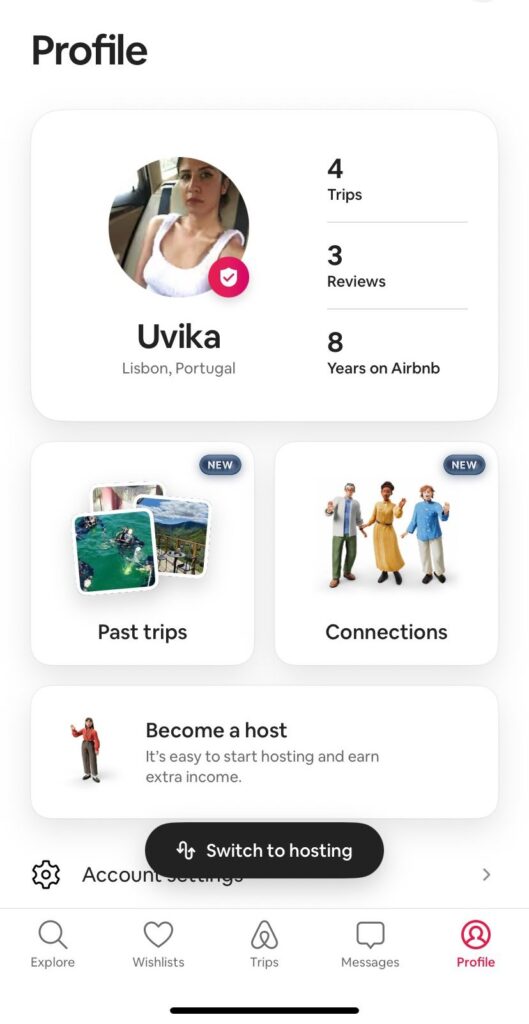
Now add WeRoad. A WeRoad trip produces multiple verified, high-trust connections between real people who actually spent a week together. Drop those people back into Airbnb, and Airbnb gets:
- Verified offline relationships
- Shared taste data
- Repeat group-travel intent
- Identity continuity across trips
This is what an in-real-life social graph actually needs. You cannot build it from booking data alone. You can build it from booking data plus group-trip data. That is what Airbnb just bought. The Connections feature was always the foundation — WeRoad is the accelerant.
What This Means for Professional Property Managers
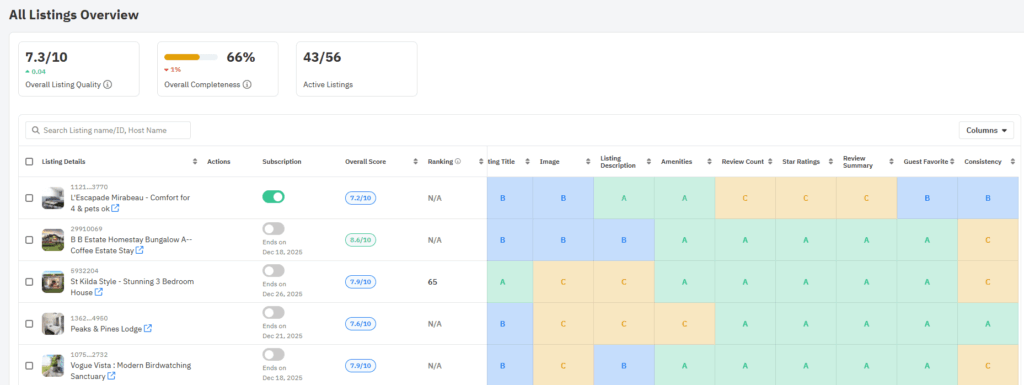
If Airbnb is going to reward group dynamics, social-first travellers, and IRL connection, then the algorithm will eventually reward the listings that match. Airbnb’s 800-signal ranking model already evaluates listings far beyond price and availability — communal fit and experience quality are increasingly part of that signal set.
Rethink your floor plan, not your bedroom count
For years, the optimisation game has been: fit as many beds as possible. That game is shifting. A property with eight beds and no communal space will lose to a property with six beds, a long dining table, a fire pit, and a kitchen big enough for a group cooking class.
Audit your listings. Where can groups actually be together? Not just sleep. Be together. If the answer is “nowhere obvious,” rewrite the description. And if the description cannot fix it, the property might.
Build the activities layer
WeRoad’s 60% rebook rate is not about the destinations. It is about the structure: group cooking classes, guided hikes, organised dinners, a wine tour with a real guide. This is what Millennial and Gen Z group travellers are paying for, and it is what Airbnb is now subsidising on its own platform. Airbnb Experiences’ relaunch in 2025 was the first signal. WeRoad is the confirmation.
If you manage properties and do not have local experience partners on speed dial, you are about to be at a disadvantage on a platform that is increasingly going to reward listings tied into the local social fabric.
Watch the hotels move
D’Amico’s appointment means boutique hotels are about to get serious attention on Airbnb. If you operate in markets with strong boutique hotel competition, expect the platform to surface them more aggressively. Distinguish on the things hotels structurally cannot offer: full kitchens, communal living, group capacity, and, increasingly, your ability to host the kind of trip people come home from with new friends.
Bottom line
The WeRoad investment is small in dollar terms. The strategic signal is not small at all. Airbnb is no longer dressing up its loneliness narrative as a slide in an investor deck. It is now buying the supply, hiring the executives, and writing the checks needed to make a real-life social network actually work.
Property managers who treat their listings as “places to sleep” will keep winning some bookings. Property managers who treat their listings as “places where groups become friends” will be the ones the algorithm starts pushing.

Uvika Wahi is the Editor at RSU by PriceLabs, where she leads news coverage and analysis for professional short-term rental managers. She writes on Airbnb, Booking.com, Vrbo, regulations, and industry trends, helping managers make informed business decisions. Uvika also presents at global industry events such as SCALE, VITUR, and Direct Booking Success Summit.