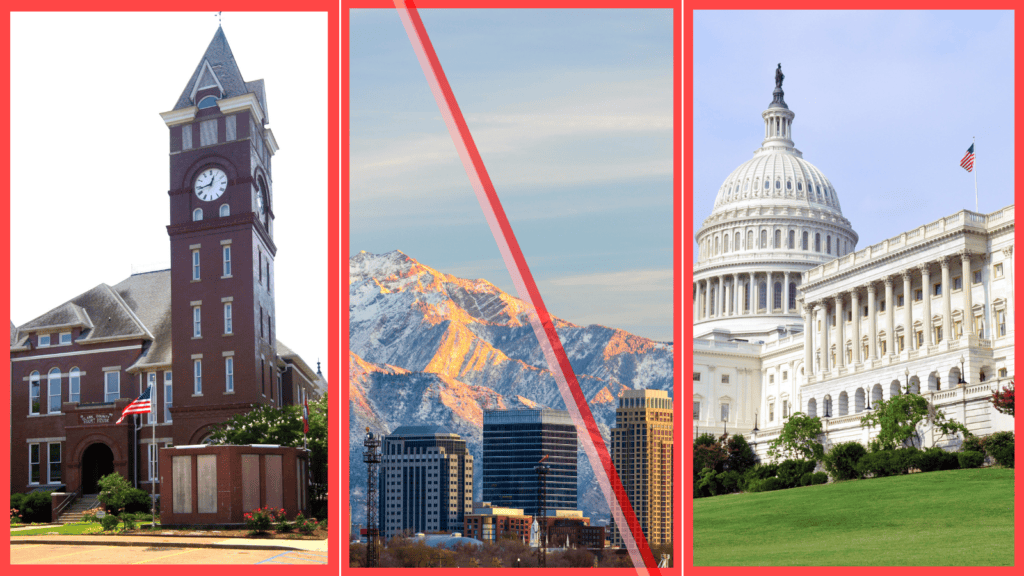
Short-term rental policies updates this week: Clark County, Salt Lake City, and Washington, D.C., each moved on strategies affecting operators. The landscape highlights how regulatory enforcement is evolving: from holding platforms financially liable in Nevada, to direct legal friction over enforcement methods in Utah, to proposed legislative easing that remains stalled in the nation’s capital.
Clark County Prohibits Platforms From Processing Unlicensed Payments
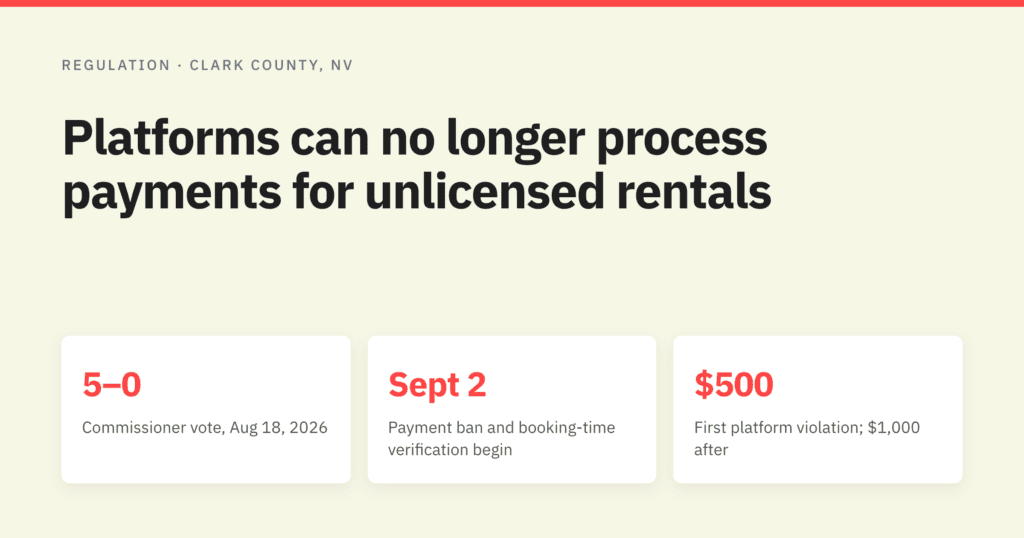
- On August 18, 2026, Clark County commissioners voted 5-0 to amend the short-term rental ordinance for unincorporated areas, shifting the primary compliance burden onto booking platforms like Airbnb and Vrbo.
- Effective September 2, platforms are prohibited from accepting or facilitating payments for unlicensed rentals.
- The county is implementing an electronic verification system that platforms must use at the time of booking. Non-compliant platforms face fines of $500 for a first violation and $1,000 for subsequent violations.
Uvika’s Views
- Routing Around Legal Roadblocks: Following a federal judge’s preliminary injunction last year that temporarily halted the county from directly fining hosts, Clark County has adjusted its strategy.
- By prohibiting platforms from processing payments for unlicensed units, the county is effectively managing inventory without directly engaging in legal disputes with individual homeowners.
- Platform Liability in Event Markets: As Las Vegas prepares for major events like the Grand Prix, enforcing compliance through digital gateways ensures broader coverage.
- What professional managers can do is verify that their Clark County licenses are properly integrated with platform verification systems to avoid automated payment suspensions.
Airbnb Issues Cease-and-Desist to Salt Lake City Over Enforcement Tactics
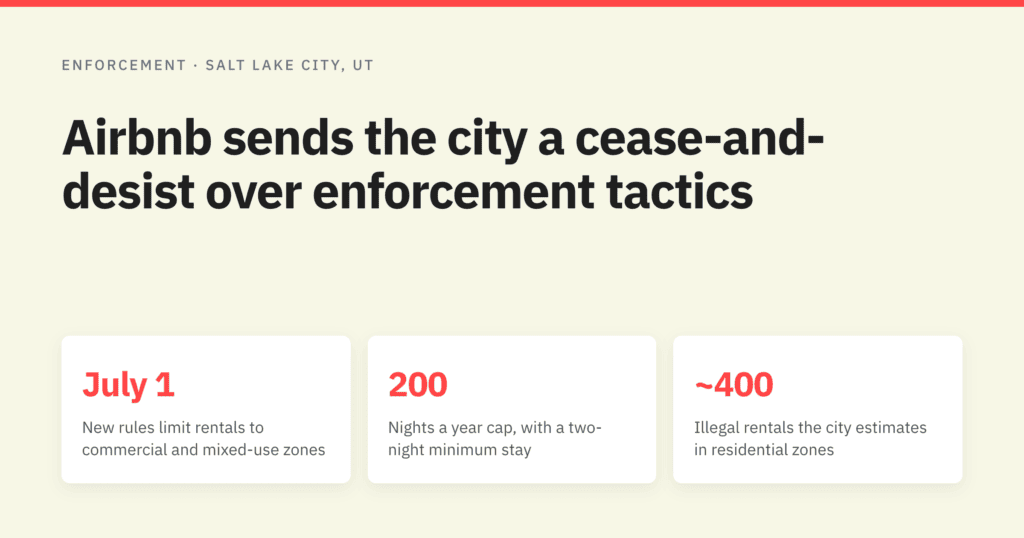
- Airbnb sent a cease-and-desist letter to Salt Lake City in early August 2026, first reported by the Salt Lake Tribune on August 14, challenging the city’s enforcement methods.
- The platform alleges that city enforcement staff created fraudulent guest accounts to solicit booking confirmations from suspected illegal operators, which Airbnb states violates its terms of service.
- Salt Lake City implemented new licensing rules on July 1, 2026, which restrict short-term rentals to commercial and mixed-use zones, enforce a two-night minimum stay, and cap operations at 200 nights annually.
- City officials estimate there are approximately 400 illegal rentals operating in prohibited residential zones.
Uvika’s Views
- A Shift to Legal Offense: It is notable to see Airbnb take a proactive legal stance against a municipality’s enforcement tactics rather than strictly focusing on broad policy advocacy.
- This signals a willingness to actively contest zoning-based restrictions that significantly reduce available supply.
- Contrasting Strategies: We have covered platform liability enforcement models elsewhere, noting cooperative data-sharing postures in markets like Porto.
- The friction in Salt Lake City demonstrates the dual nature of platform strategies: cooperating with data gateways where feasible, but challenging municipalities that utilize unsanctioned methods to enforce strict residential zoning caps.
- Navigating Zoning Compliance: With the city actively reviewing suspected violations, professional operators must ensure their portfolios are strictly aligned with approved commercial and mixed-use zoning districts to maintain operational stability.
Washington, D.C. Weighs Bill to Permit Renter-Hosting and Second Properties
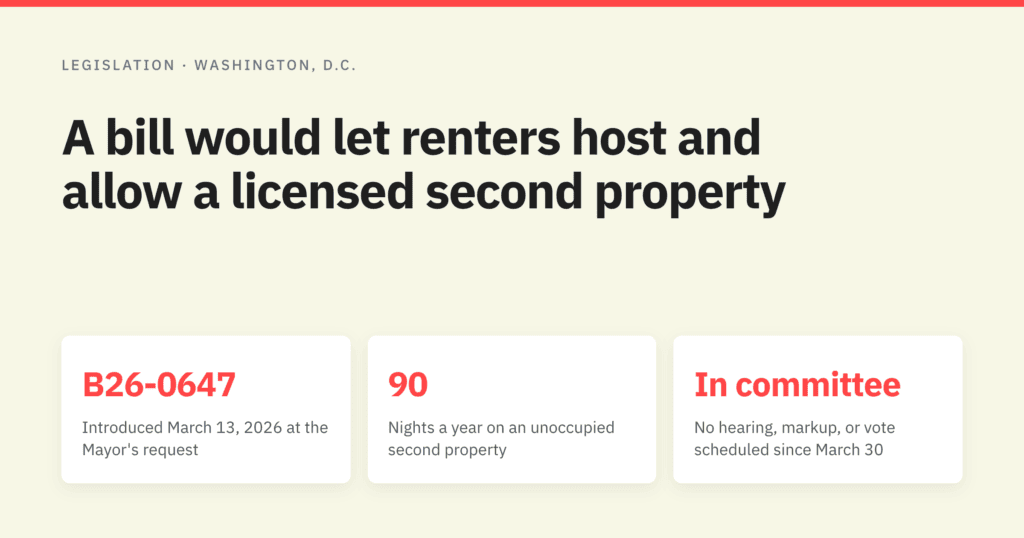
- The District of Columbia is considering the Short-Term Rental Regulation Amendment Act of 2026 (B26-0647), introduced by Chairman Mendelson at Mayor Bowser’s request on March 13, 2026. The bill has sat in committee since a March 30 referral, with no hearing, markup, or vote yet scheduled.
- If passed, the legislation would allow renters to host in their primary residences, provided they secure written authorization from the property owner and the unit is not rent-stabilized.
- Crucially, the bill proposes allowing operators to secure a short-term rental license for a second owned property, capped at 90 nights annually if the property is unoccupied, and introduces a new special-event license category.
Uvika’s Views
- Expanding the Addressable Market: Washington, D.C., has historically operated as one of the most restrictive primary-residence-only markets.
- The provision allowing a license for a second property, even with a 90-night cap, represents a material expansion of the addressable market if the bill clears committee.
- What professional managers can do is prepare to scale their portfolios by identifying secondary investment properties that would qualify under the proposed endorsement framework, while watching for movement on the bill given it has not yet reached a hearing.
- Unlocking Renter Participation: By providing a legal pathway for renter-hosting, the bill opens opportunities for approved rental arbitrage.
- Professional operators can proactively approach institutional landlords to structure compliant master lease agreements, positioning themselves to capitalize on the new regulations if the bill clears the committee phase.
Stay on top of short-term rental regulation trends and what they mean for your operating environment.

Uvika Wahi is the Editor at RSU by PriceLabs, where she leads news coverage and analysis for professional short-term rental managers. She writes on Airbnb, Booking.com, Vrbo, regulations, and industry trends, helping managers make informed business decisions. Uvika also presents at global industry events such as SCALE, VITUR, and Direct Booking Success Summit.
Related Articles:
 Holidu Acquires Finca Mallorca, Airbnb vs. Brazil Rental Bill, and NYC’s Law 18 Faces Renewed Scrutiny
 Airbnb Flips the Script: Turning the Hotel Lobby’s Playbook Against Itself
 Croatia Signals Rental Limits, Maui Rejects Rezoning Lifeline, and Evanston Shifts to Discretion-Based Oversight
 Edinburgh Launches UK’s First Visitor Levy, NYC Defends Local Law 18, Norwich Enacts Instant Bylaws