

Short-term rental policies are shifting on three fronts: platform-level data integration in Porto, the compounding effect of non-transferability rules in Pitkin County, and a European move away from outright bans toward tourist dispersal.
Porto City Council Integrates Direct Airbnb Monitoring Portal
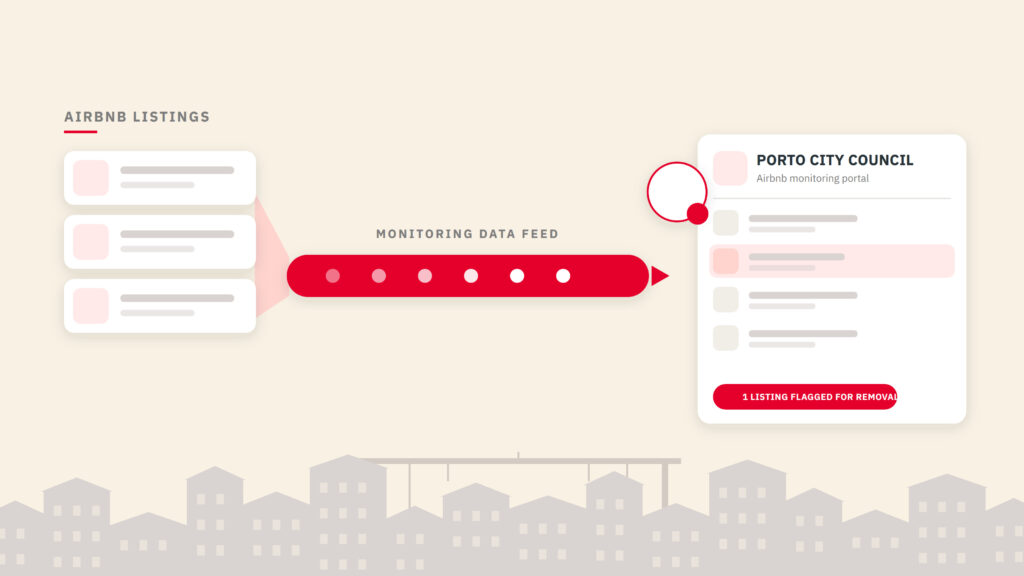
- Airbnb has launched a dedicated digital tool that gives Porto city authorities direct insight into short-term rental activity on its platform.
- The portal lets the municipality monitor listings and directly request the removal of non-compliant properties.
- It is part of an ongoing agreement between Porto and Airbnb to regulate accommodation based on data evidence and to relieve housing-market pressure in urban centers.
Uvika’s Views
- Not a New Tactic: This portal sounds like a novel concession, but it is an established Airbnb playbook. We flagged the Airbnb City Portal rollout back in 2021, and the platform’s wider public-affairs approach in the analysis linked above. Direct dashboards let Airbnb control the data narrative and build municipal goodwill while easing regulatory pressure.
- Built on the EU Data Rules: With EU Regulation 2024/1028 (the Single Digital Entry Point mandate) now active, the era of anonymous hosting in Europe is structurally over. Because platforms are already legally required to transmit data to national gateways, offering user-friendly monitoring tools to individual cities like Porto is the logical next step. Operators can expect this level of direct municipality-to-platform integration to become standard across major European destinations.
Pitkin County Short-Term Rental Supply Shrinks 29%
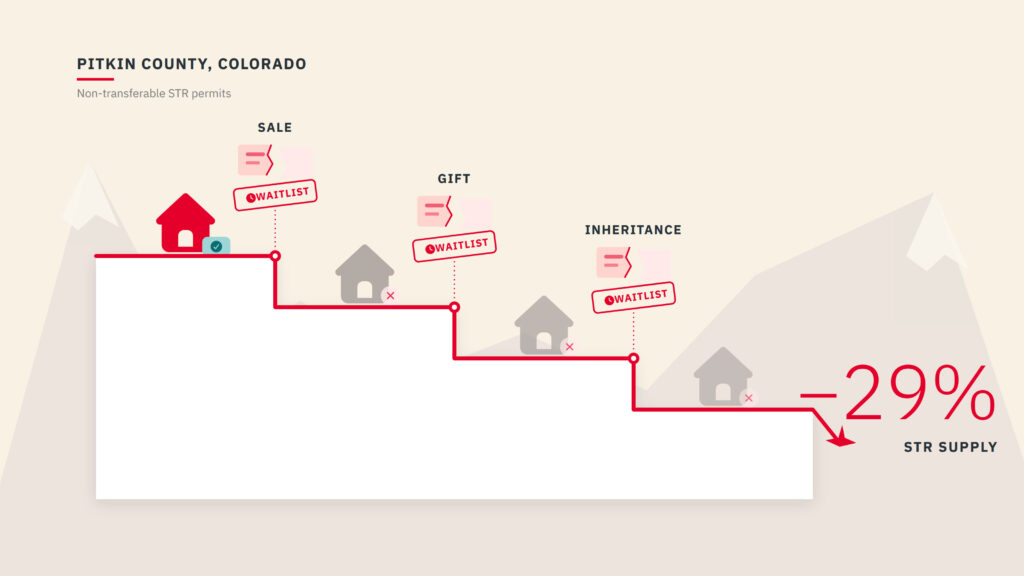
- A mid-2026 Aspen Journalism analysis confirms that licensed short-term rental supply in Pitkin County has fallen 29% over the past three years, and 62% from pre-regulation levels.
- Across the city of Aspen and the county combined, active permits are down about 9% since 2023, when the two programs together issued roughly 900 permits.
- The contraction is directly attributed to strict regulatory caps and non-transferability rules on rental permits.
- When a property is sold, the existing short-term rental license is voided and cannot pass to the new owner, forcing the buyer onto a lengthy waitlist if the local cap has been reached.
Read More: Salt Lake City Activates Licensing, Malaga Freezes New Permits, Byron Bay Listings Drop 15%
Uvika’s Views
- The Non-Transferability Trap: Caps stop market growth, but non-transferability rules actively shrink it over time. We recently saw this mechanism in Greece, where a new Finance Ministry bill proposed revoking short-term rental registration numbers (AMA) in central Athens on any change of ownership, including gifts, parental transfers, and inheritance. For property managers, non-transferability destroys the ability to sell a property as a turnkey short-term rental business, severely denting long-term asset valuations.
- Data Confirms the Strategy: The 29% drop in Pitkin County echoes the 15% listings drop we recently covered in Byron Bay, Australia. The empirical picture is consistent: aggressive day caps and non-transferability clauses do force listings off the market through natural real estate turnover.
European Parliament Adopts Overtourism Resolution
- In late April 2026, the full European Parliament adopted an initiative report and resolution aimed at reshaping tourism across the EU (the Transport and Tourism committee approved it on March 18 by 33 votes to four; the plenary then adopted it by 439 votes to 42).
- The resolution’s primary goal is to combat overtourism by easing pressure on the most popular destinations and encouraging travelers to visit lesser-known, rural, or remote areas.
- It acknowledges the need to regulate short-term rentals to protect community cohesion, and it calls for investment in sustainable mobility and infrastructure to physically distribute demand.
Read More: The May 20 EU Data Deadline: Should Property Managers Expect Mass Delistings?

Uvika’s Views
- A Shift from Bans to Dispersion: This is a conceptual divergence from the hyper-local, outright bans we are seeing in cities like Florence or Vienna. Because you cannot legally stop tourists from entering a city, the EU is focusing on a macro-level strategy of dispersion, using transport links and digital promotion to spread the economic benefits of tourism out to rural areas.
- Managing Expectations: Be clear on what this resolution actually means. It is a non-binding strategy and policy direction, not binding law, even though the full Parliament has now adopted it. It does not mean new restrictions hit your portfolio next week. It signals the long-term funding and policy priorities feeding the European Commission’s upcoming EU Sustainable Tourism Strategy, heading into the late 2020s.
Stay on top of short-term rental regulation trends and what they mean for your operating environment.

Uvika Wahi is the Editor at RSU by PriceLabs, where she leads news coverage and analysis for professional short-term rental managers. She writes on Airbnb, Booking.com, Vrbo, regulations, and industry trends, helping managers make informed business decisions. Uvika also presents at global industry events such as SCALE, VITUR, and Direct Booking Success Summit.
Related Articles:
 France’s New Anti-Airbnb Law: What It Means for the Vacation Rental Industry
 Airbnb Under Fire in Spain: What the 66,000 Listing Purge Means
 California’s Crackdown Widens: Beverly Hills Moves to Ban Short-Term Rentals Entirely
 Maui Inches Toward Rental Ban, Bali Targets Unlicensed Villas, and PriceLabs gets Recognition