

Short-term rental policies updates this week: Turkey, Japan, and Florida each moved on strategies affecting operators. The landscape shows a distinct shift in tactics globally, from enforcing platform-level accountability in the Middle East, to granting localized zoning authority to Japanese wards, to increasing operating overhead via registration fee adjustments in the US.
Turkey proposes bill requiring local representatives for online travel agencies
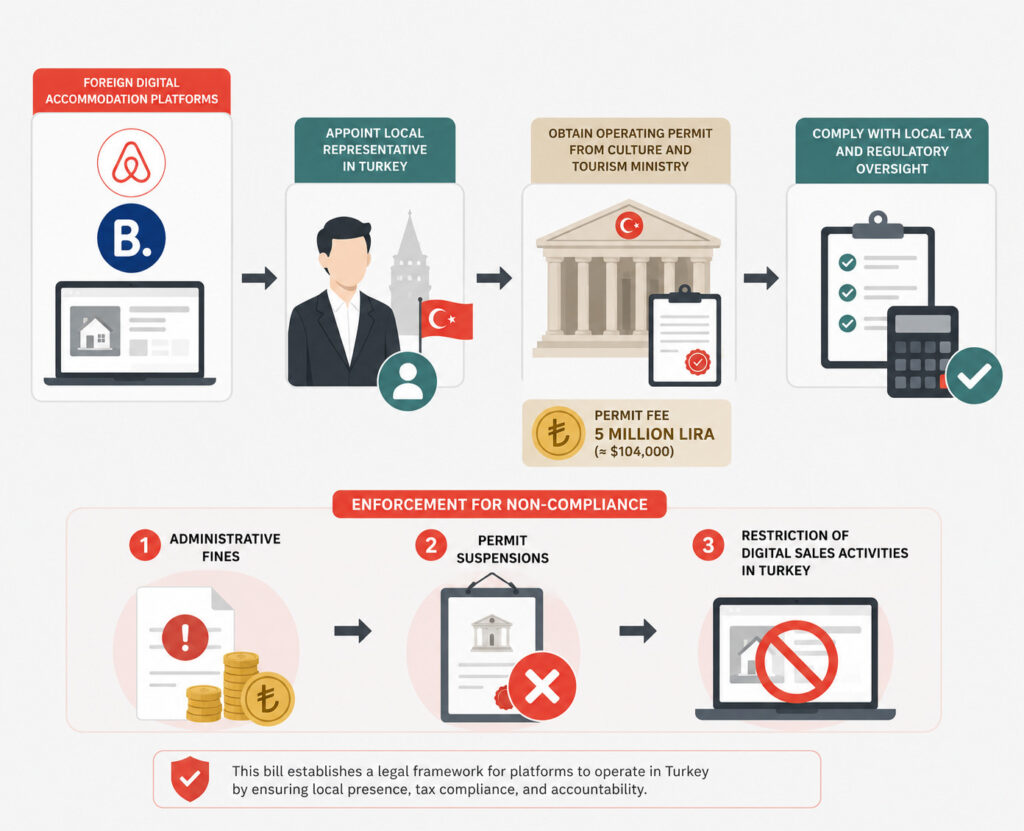
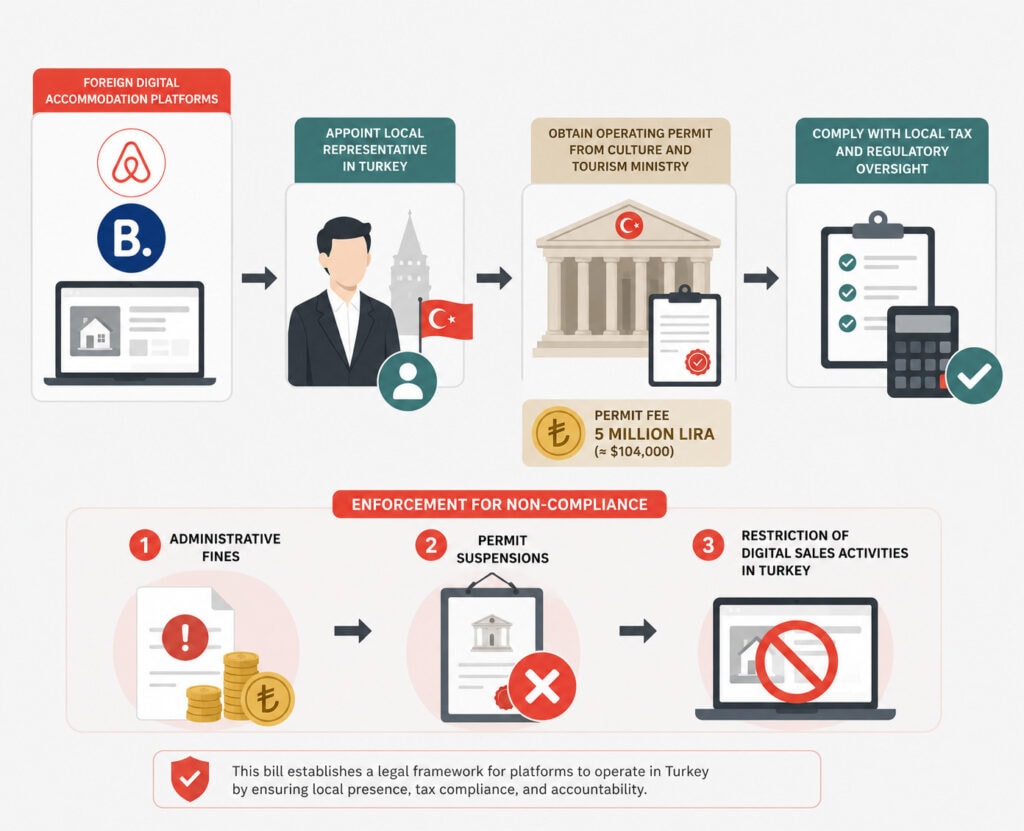
- Turkey’s ruling Justice and Development Party (AKP) submitted a bill in early August requiring foreign digital accommodation platforms (such as Airbnb and Booking.com) to obtain formal operating permits from the Culture and Tourism Ministry.
- To obtain this permit, which carries a fee of 5 million lira (roughly $104,000), platforms must officially appoint local representatives within the country.
- The “Why”: This bill addresses a long-standing regulatory dispute. Booking.com had previously faced operational suspensions in Turkey in 2017 over tax jurisdiction concerns. This new framework establishes a formal structure for platforms to operate locally, provided they comply with regional tax oversight.
- The Timeline: The bill outlines a three-stage enforcement mechanism for non-compliant platforms: administrative fines first, followed by permit suspensions, and ultimately restrictions on digital sales activities within Turkey.
Uvika’s Views
- Platform-level accountability: Governments are increasingly shifting their focus from monitoring individual unpermitted hosts to regulating distribution channels directly. This mirrors the compliance infrastructure the EU has just switched on, requiring platforms to share monthly booking data with national authorities. By requiring platforms to establish a legal, local presence, Turkey is setting up a framework for direct compliance and automated tax collection.
- Platform compliance requirements: When platforms are required to establish local representation, they must align with regional tax authorities to maintain operating permits.
- What professional managers can do is ensure their portfolios are fully registered and tax-compliant now.
- Platforms will likely more promptly delist non-compliant properties to maintain their own operational authorization.
Japan allows municipalities to impose “zero-day” restrictions
- The Japan Tourism Agency recently updated its policy guidance, allowing local governments to restrict private short-term rentals in specific residential neighborhoods.
- Municipalities can now adjust the permitted operating window below the standard 180-day national cap, down to “zero days” in designated zones.
- The “Why”: The national government is responding to an increase in community feedback regarding noise and neighborhood density. By granting this authority, local city wards can manage short-term rental activity near schools and quiet residential areas without enacting complex zoning changes.
- The Scope: The zero-day restriction specifically applies to the minpaku category (private residences used for paid lodging under the Private Lodging Business Act). It does not apply to traditional hotels or monthly leases.
Uvika’s Views
- Capitalizing on co-hosting: Airbnb’s co-host marketplace launch and expansion into Japanese real estate put the company in a strong position as municipalities gain more zoning discretion. With local wards holding greater say over operating windows, compliance oversight is shifting to a hyper-local level, and professional co-hosts can provide clear value by managing these neighborhood-specific requirements for independent property owners.
- Pivoting to exempt categories: The new zero-day policy applies specifically to minpaku properties.
- What professional property managers can do to insulate their portfolios is prioritize acquiring or managing assets zoned for traditional hotel (ryokan) or monthly rental use.
- These assets operate under separate legal frameworks and remain exempt from these municipal limits.
St. Augustine approves short-term rental fee adjustments
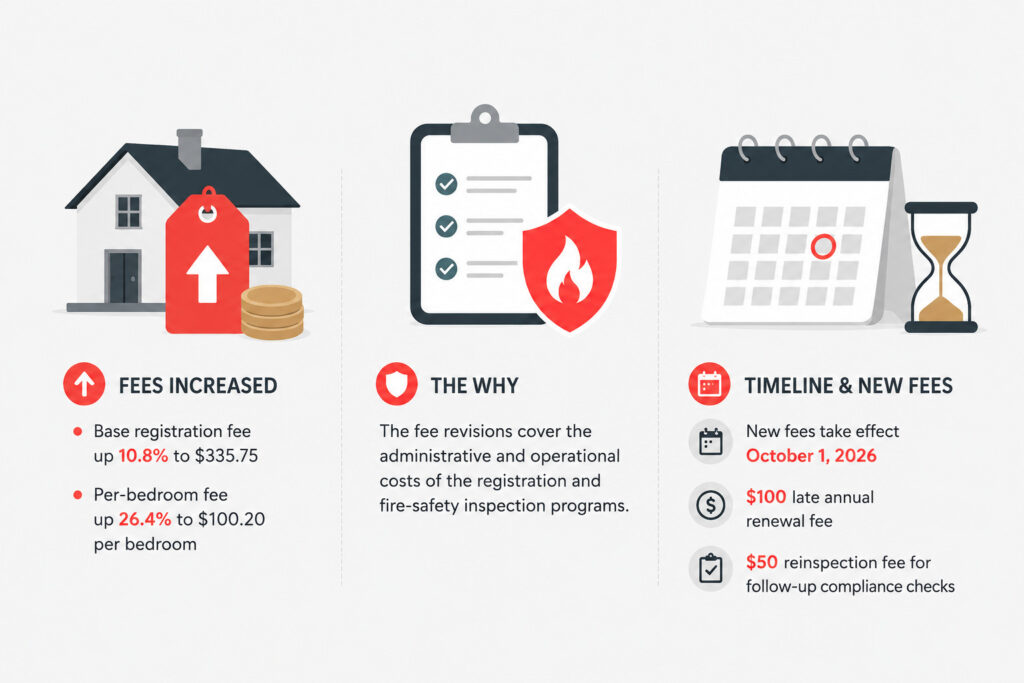
- On August 10, 2026, the St. Augustine City Commission in Florida voted unanimously (3-0, with two commissioners absent) to adjust annual short-term rental administrative fees.
- The base registration fee increased by 10.8% (to $335.75), while the separate per-bedroom fee increased by 26.4% (to $100.20 per bedroom).
- The “Why”: The city says the fee revisions cover the administrative and operational costs of running its registration and fire-safety inspection programs.
- The Timeline: The new fee schedule takes effect on October 1, 2026. The resolution also introduced a $100 fee for late annual renewals and a $50 reinspection fee for follow-up compliance checks.
Uvika’s Views
- The “regulation by taxation” trend: After Florida’s SB 280 veto, local municipalities retained their authority to regulate short-term rentals, and where state preemption laws limit direct bans or stay duration restrictions, local councils like St. Augustine are using fee adjustments to manage market oversight instead.
- Aligning cost structures: When municipal per-bedroom administrative fees increase, operators need to evaluate their pricing structures.
- What professional property managers can do is adjust their dynamic pricing parameters to incorporate these fee revisions into the baseline rate structure.
- This aligns administrative overhead with guest revenue while maintaining operating margins.
Stay on top of regulatory trends and what they mean for your operating environment.

Uvika Wahi is the Editor at RSU by PriceLabs, where she leads news coverage and analysis for professional short-term rental managers. She writes on Airbnb, Booking.com, Vrbo, regulations, and industry trends, helping managers make informed business decisions. Uvika also presents at global industry events such as SCALE, VITUR, and Direct Booking Success Summit.
Related Articles:
 Booking.com Reveals AI Trust Gap, Skift Acquires Hospitality.fm and WLT&H, Ocean City Blocks Rental Crackdown
 Airbnb to Appeal New Orleans Ruling, Expands Compliance Push in Spain, Key Data Launches New Tools in the UK
 Austin Enforces Platform Verification, BC Touts Rent Drops, Scottsdale Bans Event Centers
 Porto Gets Airbnb Portal, Pitkin County Supply Shrinks 29%, EU Adopts Overtourism Strategy